Japan in Summer 2026: Festivals & Heat Survival
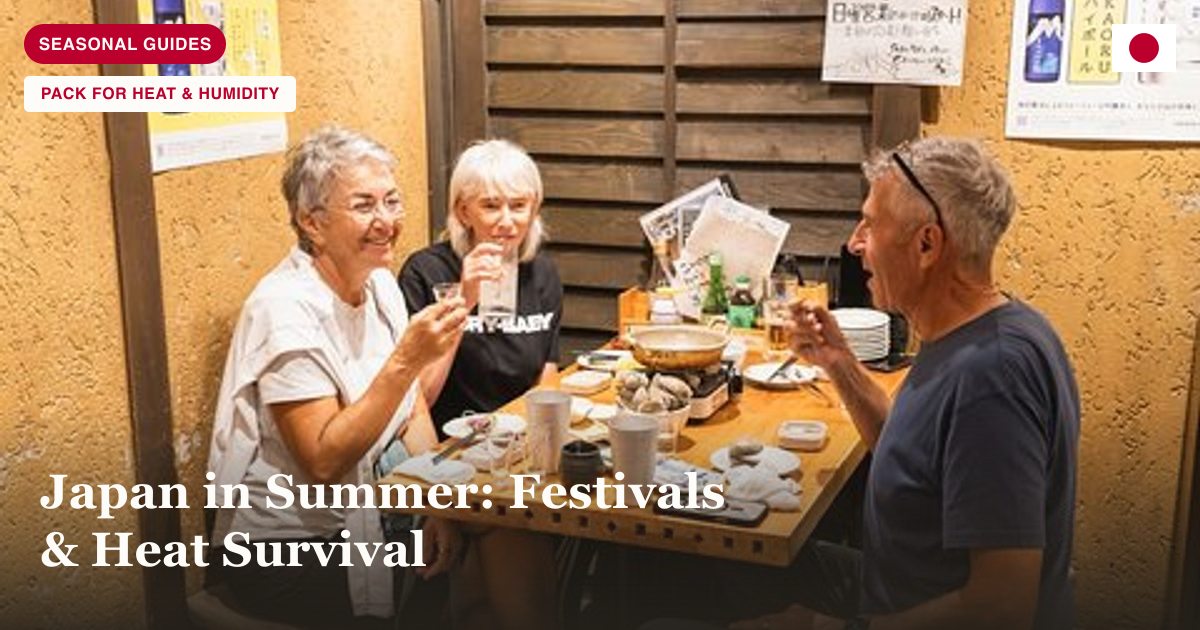
Summer Japan is a deal wrapped in a sauna: the festival calendar peaks exactly when the heat does, and the discounts live in the month everyone wrongly avoids. Here’s how to play all three months.
Verified: August 27, 2026.
June: the discount month nobody books
Rainy season (tsuyu) scares tourists off, and it shouldn’t:
- Rain pattern: bursts and drizzle between clear spells, not monsoon washouts
- Prices: hotels 20–30% off peak rates; Kyoto’s impossible rooms become bookable
- The looks: hydrangeas (Kamakura’s Hasedera is the pilgrimage), moss temples at maximum green, misty bamboo
- The plan: rain-flex days, aquariums, teamLab, depachika halls, and onsen all improve in rain
June is the cheapest month with everything open. Treat it as the secret.
July–August: festivals vs heat
The festival ladder:
| Festival | Where/when | Note |
|---|---|---|
| Gion Matsuri | Kyoto, all July | Float processions 17th & 24th |
| Tenjin Matsuri | Osaka, Jul 24–25 | River boats + fireworks |
| Sumidagawa Fireworks | Tokyo, late July | 20,000 shells over Asakusa |
| Nebuta | Aomori, Aug 2–7 | The one worth routing for |
| Obon travel week | Mid-August | AVOID transit, everyone moves |
Festivals are free to attend and eat like yatai economics, budget ¥2,000 for stall food and beer, arrive 2 hours early for fireworks real estate.
The heat system: morning sights (7–11), indoor/onsen middays, evening festivals. Konbini becomes hydration infrastructure, Pocari Sweat and salt tablets are ¥300/day of not fainting. Kyoto in August is the hardest mode in the game; do temple dawns or swap Kyoto days toward the coast and mountains.
The escape valves
- Hokkaido: 22–28°C, Sapporo beer gardens, Furano lavender (July). This is where Japan itself goes in August; book beds early. Viator’s Otaru sea kayaking trip along the coast (¥15,380 ($95.06), 16 reviews) is a genuine summer-only add-on while you’re up there.
- Okinawa and the outer islands: hotter but ocean-cooled, and typhoon-roulette, travel insurance and flexible bookings.
- Mountains: Nikko’s highlands and the Alps run 5–8°C cooler than the cities below.
Summer week budget (June version)
| Line | Cost |
|---|---|
| Beds × 6 (rainy-season rates) | ¥16,000 |
| Food + hydration layer | ¥15,000 |
| Transit (the usual math) | ¥13,000 |
| Activities (rain-flexed) | ¥12,000 |
| Week total | ~¥56,000 ($373), the year’s low |
Final thoughts
June for the discount, July for Gion and fireworks, August only with a Hokkaido or island escape valve, and never move during Obon week. Summer rewards the traveler who plans around the thermometer instead of pretending it isn’t there. For the mountain escape valve, GetYourGuide’s Mt Fuji & Hakone Ropeway, Lake Ashi Cruise (¥7,808 ($48.26), 779 reviews) runs several degrees cooler than the cities.
Seasonal set: sakura · autumn · winter · Golden Week survival.
Verified as of August 27, 2026.
Book these while you’re there
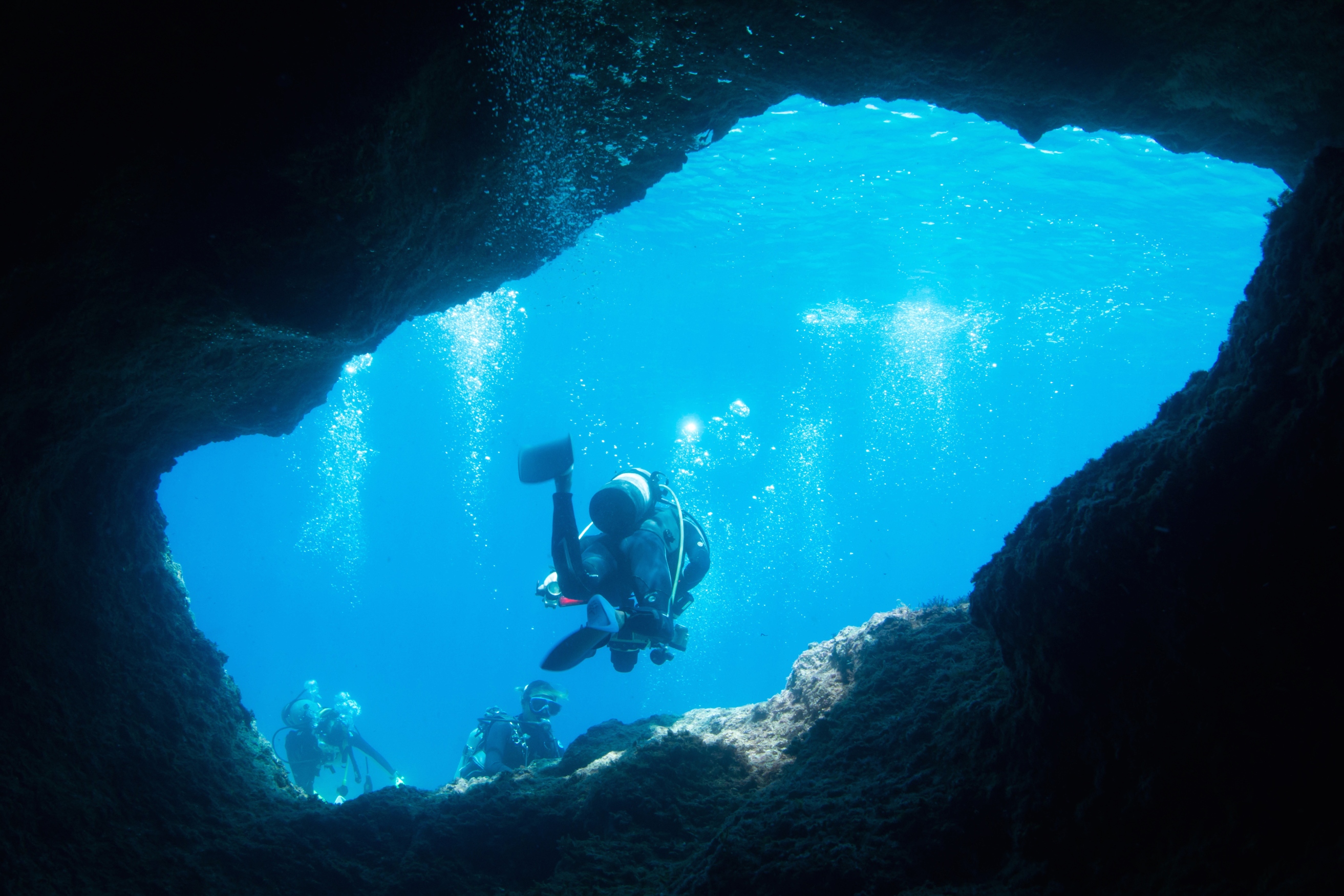
Blue Cave Snorkeling & Scuba Diving Experience

Okinawa: Kayak Mangroves & Ocean Native-English Private Tour
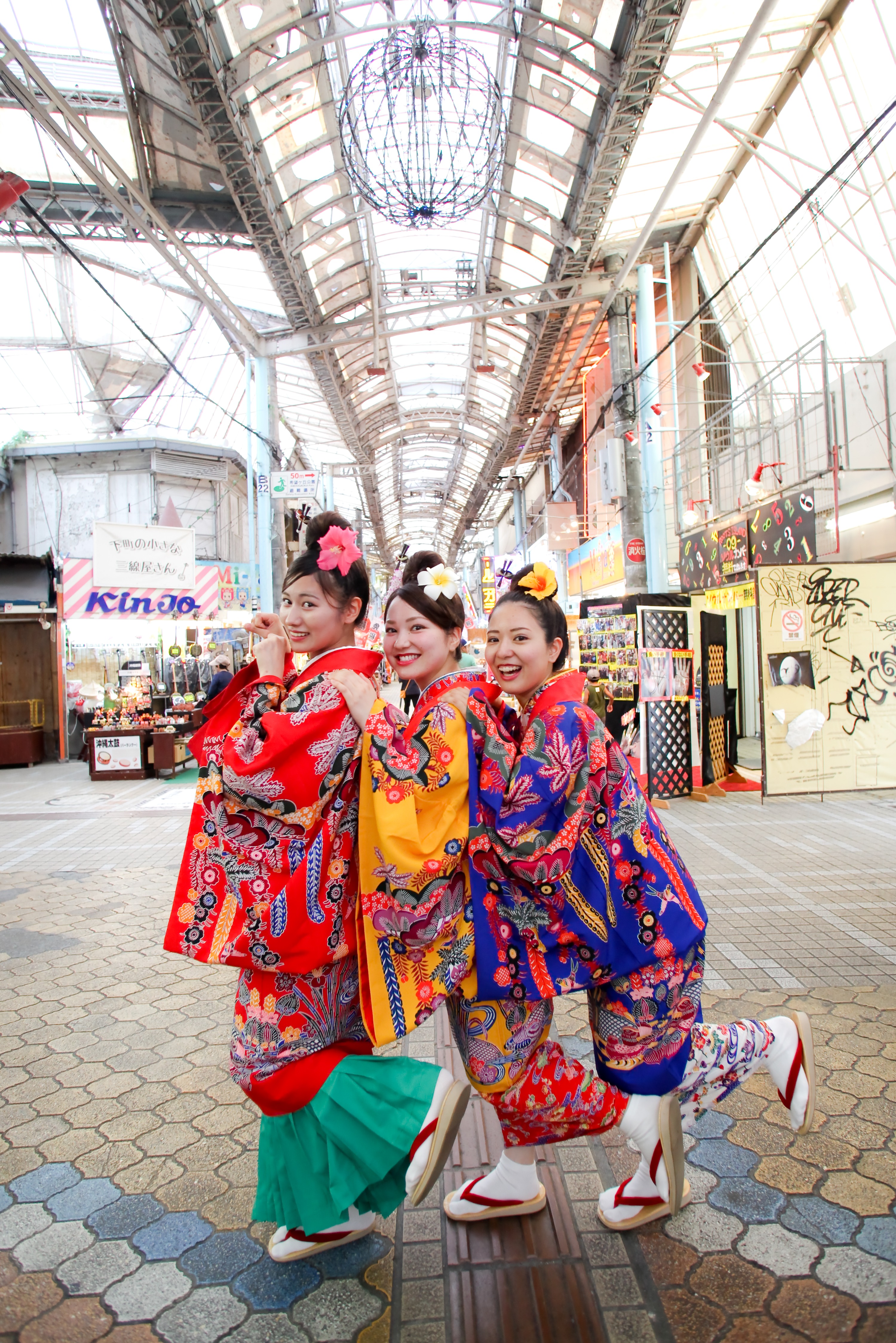
Casual Ryuso Costume Experience & Photo Shoot (Naha)

North Okinawa: Private Kayak & Snorkel Adventure

Okinawa Dream Reef | Easy Boat Trip! Snorkeling & Scuba Diving Experience | Free Unlimited Photos & Videos | Chinese Coach

Private : Okinawa Beautiful Highlights & Hidden Gems
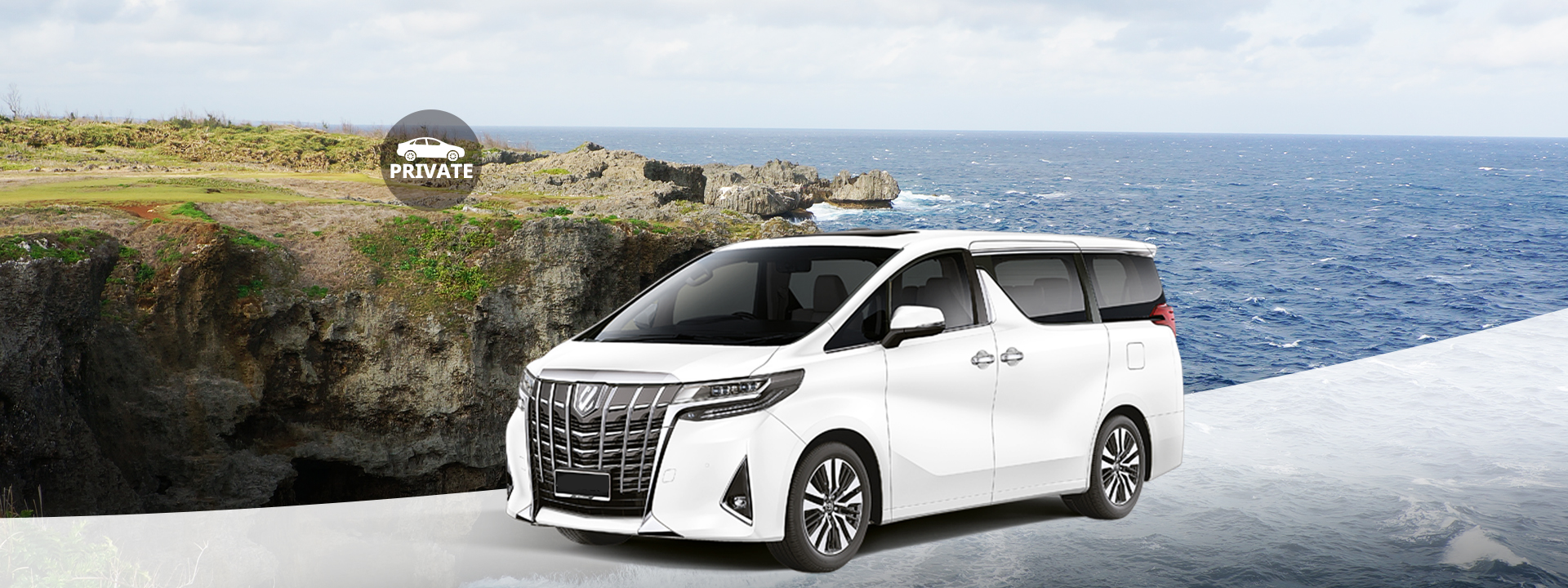
Okinawa Sightseeing Car Rental with Driver to Churaumi Aquarium/ Shuri Castle
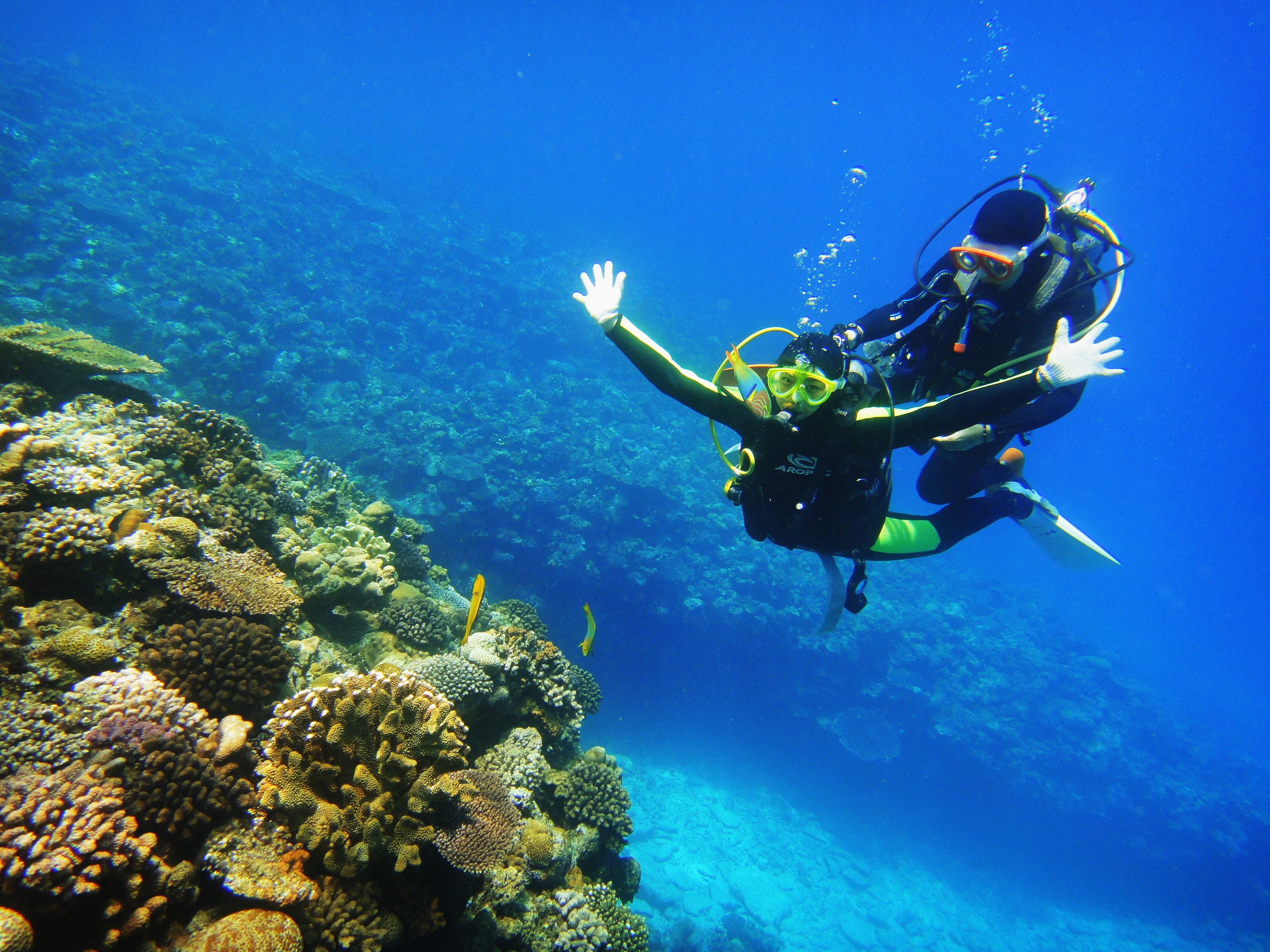
Onna Village Blue Cave Snorkeling & Scuba Diving Experience
Richmond Hotel Premier Kyoto Shijo
save ¥13,556 vs sell price
Check rateHilton Tokyo Narita Airport
save ¥7,910 vs sell price
Check rateOriental Hotel Okinawa Resort & Spa
save ¥5,889 vs sell price
Check rateFrequently Asked Questions
Is summer a good time to visit Japan?
It is the trade-off season: matsuri festivals, fireworks, and beer gardens against 33 to 38 degree heat with heavy humidity in the cities. June (rainy season) is the value window, 20 to 30 percent cheaper and greener, with rain that comes in bursts rather than all day.
How hot does Japan get in summer?
Tokyo, Kyoto, and Osaka run 33 to 38°C with humidity that makes it feel hotter, mid-July through August. Kyoto is the worst of the majors, a basin that traps heat. Hokkaido stays 22 to 28°C, which is why all of Japan vacations there in August.
What festivals happen in Japan in summer?
The big three: Kyoto's Gion Matsuri (all July, grand processions July 17 and 24), Osaka's Tenjin Matsuri (July 24-25, river boats and fireworks), and Aomori's Nebuta (August 2-7, illuminated float parades). Fireworks festivals run nationwide most July and August weekends.
Is rainy season a bad time to visit Japan?
No, it is underrated: June rain falls in bursts between clear spells, hydrangeas peak, everything is green, and hotels discount 20 to 30 percent. Pack a compact umbrella and enjoy the cheapest good month of the year.