Japan Konbini Food Guide: Eat Well Under ¥500 Per Meal 2026
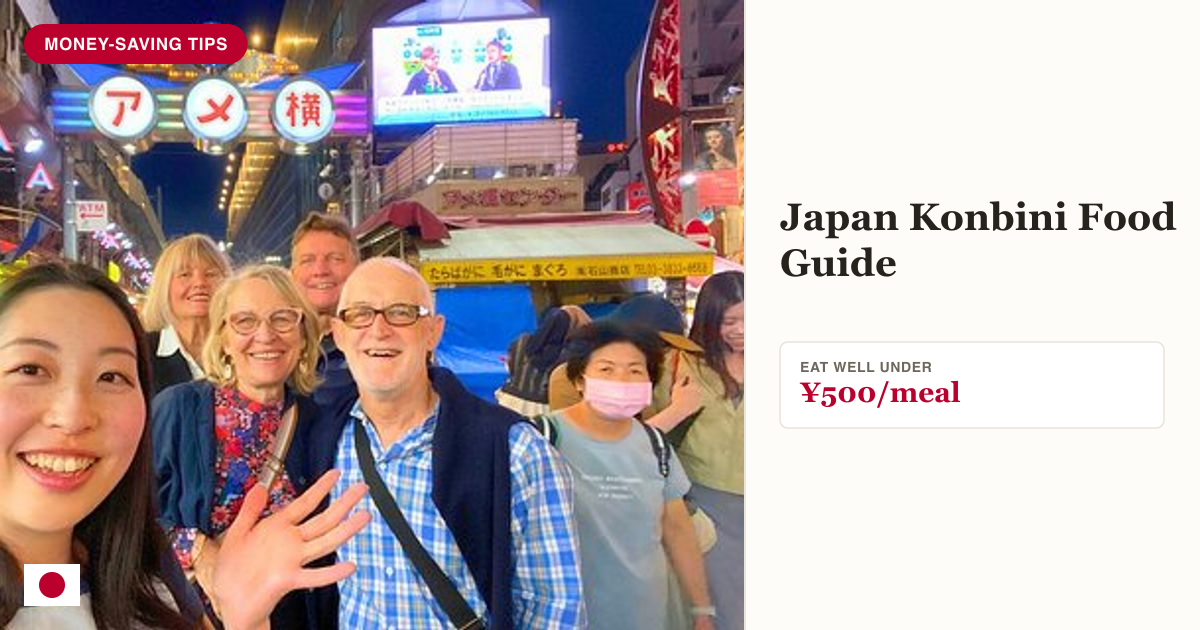
Three konbini chains, 7-Eleven, FamilyMart, Lawson, will feed you better for ¥1,500/day than most tourist restaurants will for ¥5,000. This is the system locals actually use, not a compromise.
Verified: August 27, 2026.
The ¥1,500 full day
| Meal | Order | Cost |
|---|---|---|
| Breakfast | 2 onigiri + drip coffee | ¥400–500 |
| Lunch | Bento or pasta + tea | ¥550–700 |
| Dinner | Evening-discount bento + miso soup | ¥450–600 |
| Day total | ¥1,400–1,800 |
Compare: one mid-tier restaurant dinner = ¥2,500–4,000. The konbini day funds a teamLab ticket every two days.
What to order, by chain
7-Eleven:
- Onigiri (¥120–200): tuna mayo and salmon are the gateway; umeboshi for the brave
- Drip coffee (¥120): better than most hotel coffee
- Golden bread series, egg sandwich (¥250): the famous one, deserved
FamilyMart:
- Famichiki (¥220): the fried chicken with the cult
- Spicy chicken variants, seasonal
- Bento range slightly cheaper than 7-Eleven
Lawson:
- Karaage-kun nuggets (¥240)
- Premium roll cake (¥180): dessert benchmark
- Lawson 100: the discount sibling, ¥108 flat items, best konbini value in Japan when you find one
The discount sticker game
Fresh food gets marked down before expiry:
- Supermarkets (bigger discounts): stickers start ~7 PM, hit 50% by 8:30–9 PM. A ¥600 bento becomes ¥300.
- Konbini: discounts near item expiry, usually evening, 20–30% off.
- Rule: see a supermarket (Life, Seiyu, MyBasket) near your hostel? It beats konbini for dinner every time.
No shame in the sticker aisle. Half the queue is salarymen.
Beyond konbini: the same-budget upgrades
- Standing soba at stations: ¥350–500, hot meal in 4 minutes
- Gyudon chains (Sukiya, Yoshinoya, Matsuya): ¥400–600 beef bowls, ticket machine ordering, zero Japanese needed
- Teishoku set lunches: ¥800–1,000 buys the ¥1,800-at-dinner menu, restaurant experience at konbini-adjacent prices
- Supermarket sashimi after 8 PM: half-price sashimi platters, ¥400–600. The single best food deal in Japan.
Konbini logistics tips
- Pay by Suica tap, faster than cash, one budget to track.
- Eat outside or at in-store counters. Walking-while-eating is mildly frowned on; konbini often have an eat-in shelf.
- Trash goes back to the konbini bin, public bins barely exist in Japan.
- Microwaves and hot water are free, staff will heat your bento, cup ramen gets hot water at the counter station.
- ATMs: 7-Eleven ATMs take foreign cards with fair rates. Food run + cash run, one stop.
Budget one splurge anyway
The point of saving ¥3,000/day on food is affording one counter-sushi or wagyu meal (¥3,000–8,000) without wincing. Five konbini days pay for it. That meal lands harder after a week of onigiri, that’s a feature. For that one splurge, GetYourGuide’s Tsukiji sushi-making class (¥6,760 ($41.78), 726 reviews) beats a restaurant table, you eat what you make. Viator’s ramen, sushi, and sake pairing class (¥20,507 ($126.75), 109 reviews) covers more ground for the trip’s one real food splurge.
Final thoughts
Konbini eating is the load-bearing wall of every budget in our guides, the ¥100K week assumes it, the daily budget math is built on it. Start with a 7-Eleven tuna mayo onigiri on day one and calibrate from there.
Verified as of August 27, 2026. Prices drift ±¥30 with inflation; the system doesn’t.
Book these while you’re there
Experience the Soul of Hiroshima: A Peaceful Koto Workshop

Dazaifu Tenmangu Shrine, Yufuin Town, Beppu Ropeway, Kamado Jigoku (with complimentary onsen egg and lemon soda) | Departing from Fukuoka

Samurai Training Experience KENDO in Osaka

Tokyo: Nikko Day Trip with Lake Chuzenji Boat Ride
VASARA Kimono and Yukata Rental in Fukuoka

Tokyo: Make Your Own Chopsticks Shibuya
Enoshima: History,Culture,Views& 2h Hiking with a LocalGuide
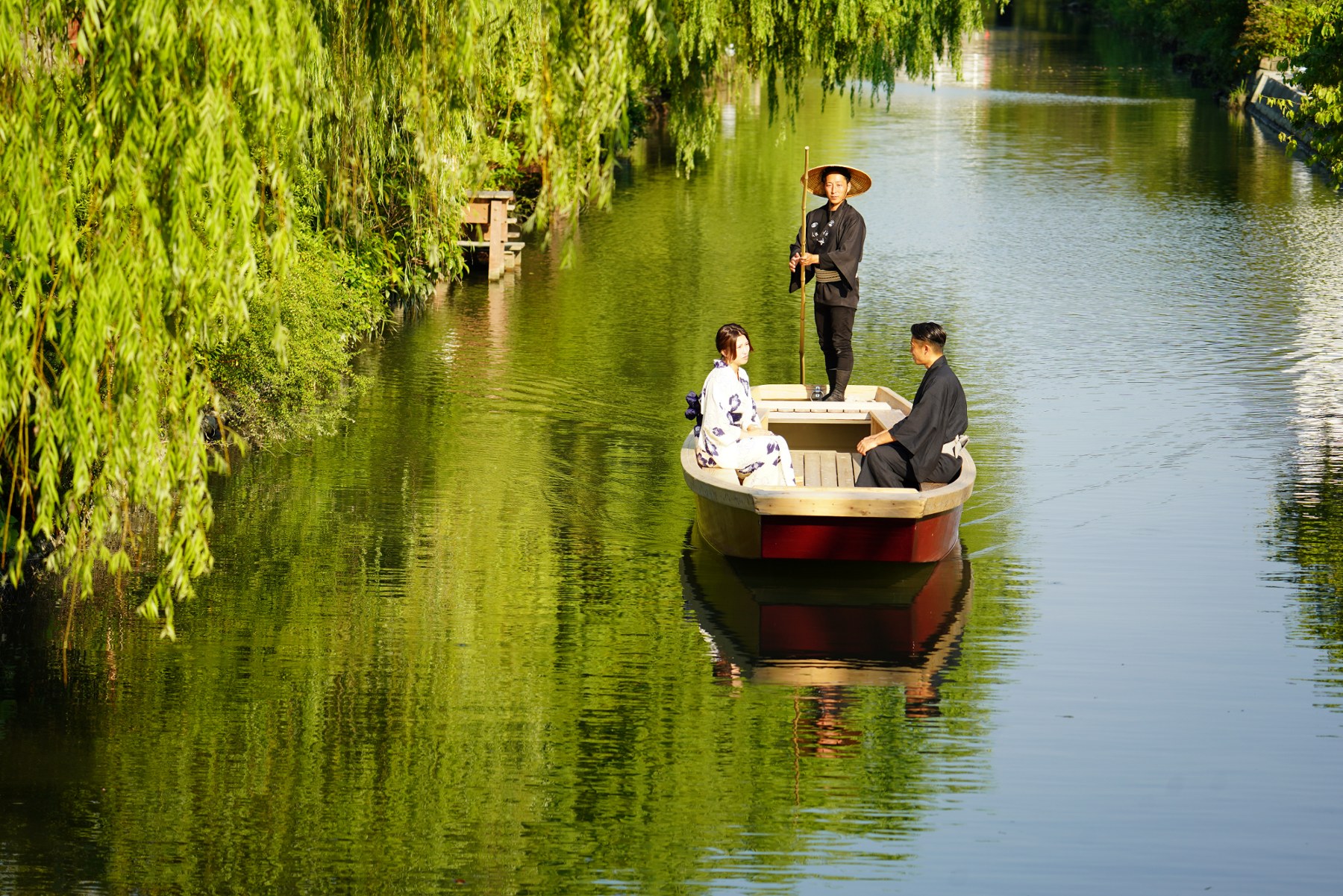
Yanagawa River Boating Experience (Shared/Private Course)
Richmond Hotel Premier Kyoto Shijo
save ¥13,556 vs sell price
Check rateHilton Tokyo Narita Airport
save ¥7,910 vs sell price
Check rateOriental Hotel Okinawa Resort & Spa
save ¥5,889 vs sell price
Check rateFrequently Asked Questions
Is konbini food in Japan actually good?
Yes, Japanese convenience stores turn over fresh food multiple times daily, and items like 7-Eleven onigiri, FamilyMart Famichiki, and Lawson karaage-kun have genuine cult followings among locals, not just tourists.
How much does eating at konbini cost per day?
¥1,300 to ¥2,000 covers three real meals: onigiri and coffee breakfast around ¥400, a bento or sandwich lunch around ¥600, and a discounted evening bento with a side around ¥600.
When do konbini discount their food?
Supermarkets sticker 30 to 50 percent off from around 7 PM. Konbini discount closer to each item's expiry time, typically evening for bento. Supermarket sticker time beats konbini for dinner if one is nearby.
Which konbini chain is best?
7-Eleven for onigiri and coffee, FamilyMart for fried chicken, Lawson for desserts and the cheaper Lawson 100 stores. In practice: use whichever is closest, they are all within 10 percent of each other.