12 First-Time Japan Mistakes That Cost Real Money 2026
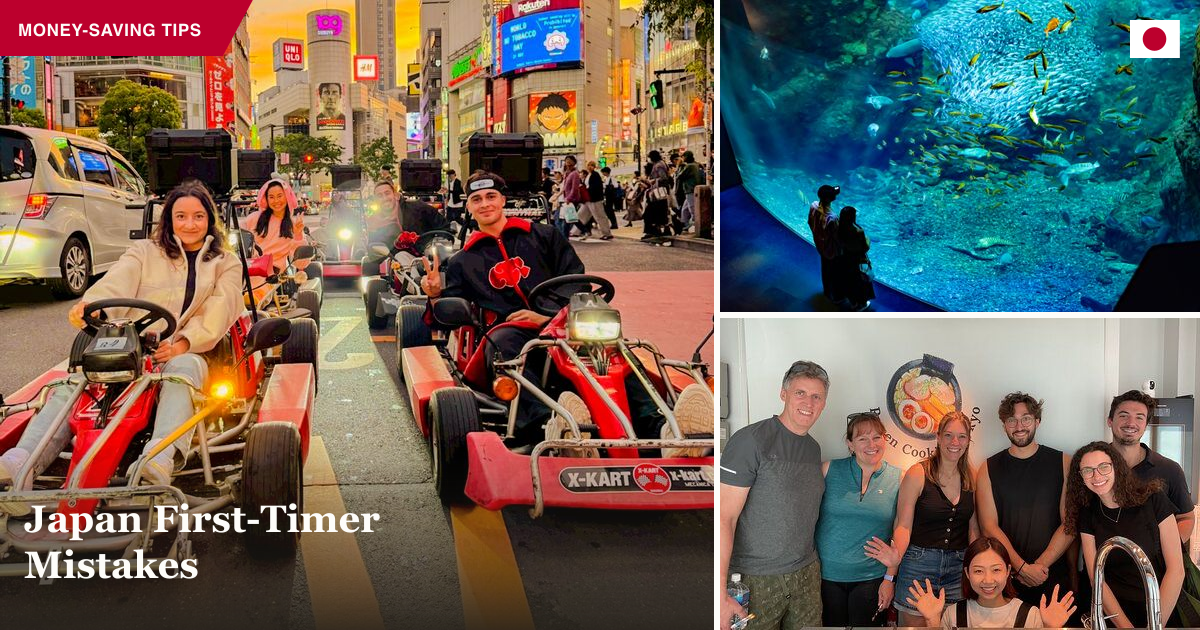
Every first Japan trip leaks money in the same dozen places. None of these mistakes are dumb, they’re defaults imported from how travel works elsewhere. Here’s each one with the fix and what it saves.
Verified: September 8, 2026.
The transport mistakes (the big money)
1. Buying the nationwide JR Pass on autopilot
The ¥50,000 pass made sense before the 2023 price hike; guidebooks haven’t caught up. Typical Golden-Route trips use ¥15–20K of trains. Fix: do the 5-minute pass math. Saves: ¥25,000–35,000.
2. Taking taxis by default
¥500 flagfall, ¥400+/km. A Shinjuku→Asakusa taxi is ¥3,500; the same trip on rail is ¥200. Fix: Suica card + trains until midnight (last train is real, after it, taxis or manga cafés). Saves: ¥3,000+/incident.
3. Paying counter price for airport transfers
The Haruka online is ¥1,246 ($7.70) vs ~double at the KIX counter; Narita options range ¥1,300–3,250 for the same journey. Fix: book transfers before flying, Narita/Haneda ranking, KIX ranking. Saves: ¥1,500–3,000/leg.
4. Buying paper tickets for every train ride
The ticket-machine fare-map squint, per ride, in a hurry. Fix: Suica/ICOCA tap covers all city transit. Saves: 10 minutes/day and mis-bought tickets.
The money-handling mistakes
5. Exchanging cash at the airport (either airport)
Home-airport counters and Japan’s tourist exchange shops run 5–10% worse than mid-market. On ¥100,000 that’s a ¥5,000–10,000 donation. Fix: 7-Eleven ATM withdrawals with a low-FX-fee card. Saves: ~¥7,000 per ¥100K.
6. Assuming cards work everywhere
The ramen shop with the ticket machine, the shrine amulet counter, the mountain-town izakaya: cash. Getting caught cashless means hunting ATMs at 9 PM. Fix: keep ¥10,000–20,000 on you, restock at konbini ATMs.
7. Skipping tax-free shopping
Purchases over ¥5,000 at tax-free counters skip 10% consumption tax with a passport. Tourists routinely pay it out of ignorance. Saves: 10% on souvenirs and Uniqlo runs.
The eating mistakes
8. Eating every meal at restaurants
Tourist-district restaurant three-meal days run ¥6,000–9,000. The konbini system covers the same nutrition at ¥1,500–2,000, and the quality surprises everyone. Fix: konbini breakfast/dinner, teishoku set lunch, one real splurge per trip. Saves: ¥4,000+/day.
9. Dinner at lunch prices, missed
The identical meal costs ¥900 at lunch and ¥1,800 at dinner via teishoku sets. Fix: make lunch the restaurant meal. Saves: ¥800+/day.
The activity mistakes
10. Paying for views twice
Skytree AND Shibuya Sky AND Tokyo Tower is ¥6,000+ of the same skyline. Fix: one paid deck, then the free ones, the Gov Building deck is 202m and ¥0. Saves: ¥2,000–4,000.
11. Walking up to timed-entry attractions
teamLab and USJ’s Nintendo World don’t sell spontaneity. Sold-out slots mean lost days or scalper pricing. Fix: book teamLab and USJ when your dates lock, everything else later. Saves: the day itself.
12. Booking hotels for single-night hops
Six hotels in seven nights adds checkout luggage-drags and per-night pricing penalties. Fix: base in 2–3 cities, day-trip the rest, regional passes make Kansai a hub-and-spoke playground. Saves: ¥1,000+/night and your back.
The tally
| Mistake avoided | Typical save (7 days) |
|---|---|
| JR Pass math | ¥30,000 |
| Konbini + lunch strategy | ¥25,000 |
| ATM vs exchange counters | ¥7,000 |
| Transfer bookings | ¥4,000 |
| One view deck, not three | ¥3,000 |
| Total | ~¥69,000 ($460) |
That’s a second week of hostels, or the flight home covered.
Final thoughts
Every fix above is one habit: check the math before defaulting. Start with the two big ones, the JR Pass decision and the konbini system, and the trip funds its own upgrades. Same habit applies to guided activities, GetYourGuide’s native-guide Osaka walking tour at ¥7,133 ($44.09) with 971 reviews is worth booking your first day, not the pricier options that show up first in search. That same instinct applies to Viator: its catalog runs mostly private guides at a real premium over Klook and GetYourGuide’s group departures, worth knowing before the first search result becomes the booking.
Put it all together: 7 days under ¥100,000.
Verified as of September 8, 2026.
Book these while you’re there
Experience the Soul of Hiroshima: A Peaceful Koto Workshop
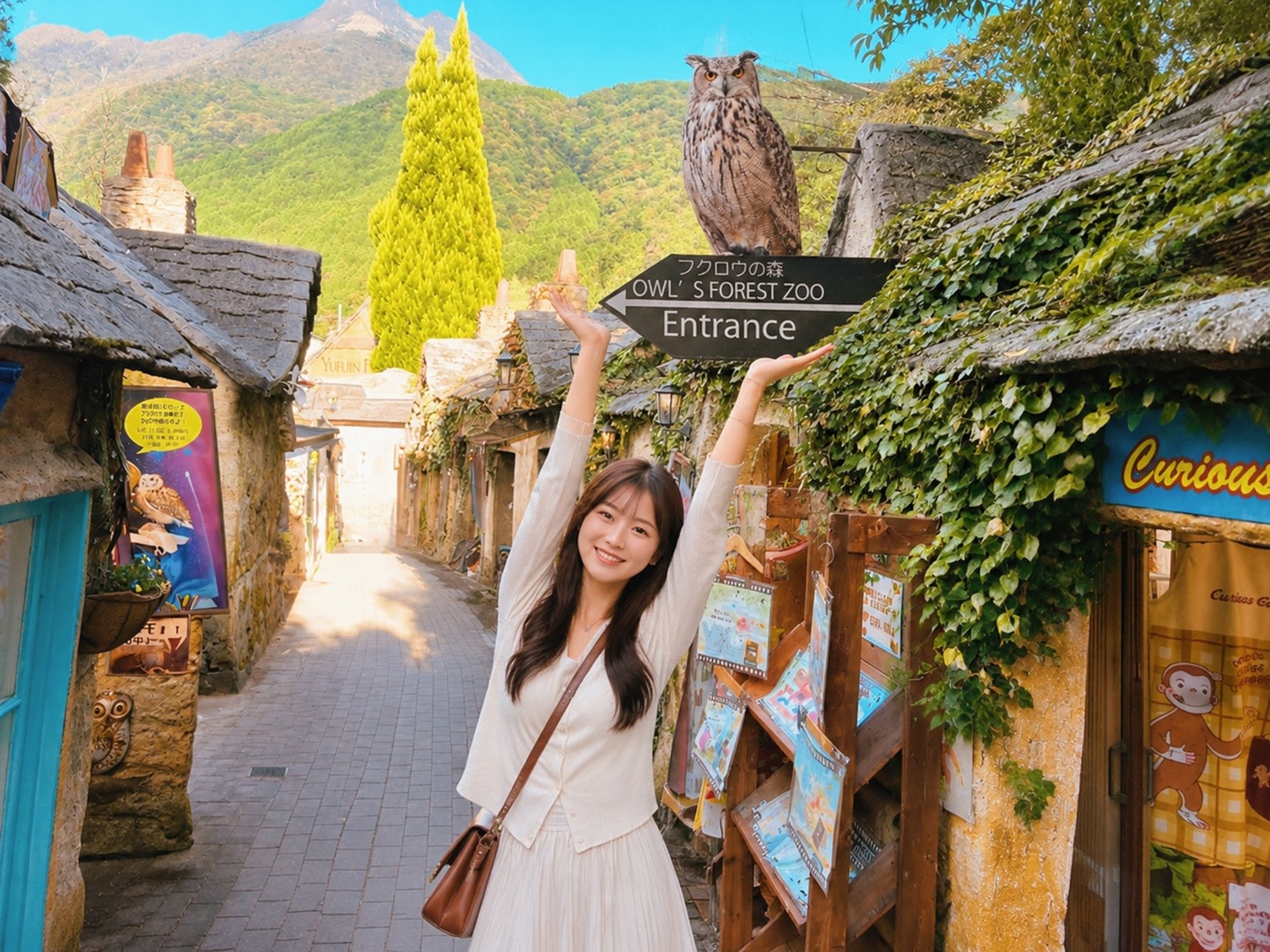
Dazaifu Tenmangu Shrine, Yufuin Town, Beppu Ropeway, Kamado Jigoku (with complimentary onsen egg and lemon soda) | Departing from Fukuoka

Samurai Training Experience KENDO in Osaka
Tokyo: Nikko Day Trip with Lake Chuzenji Boat Ride
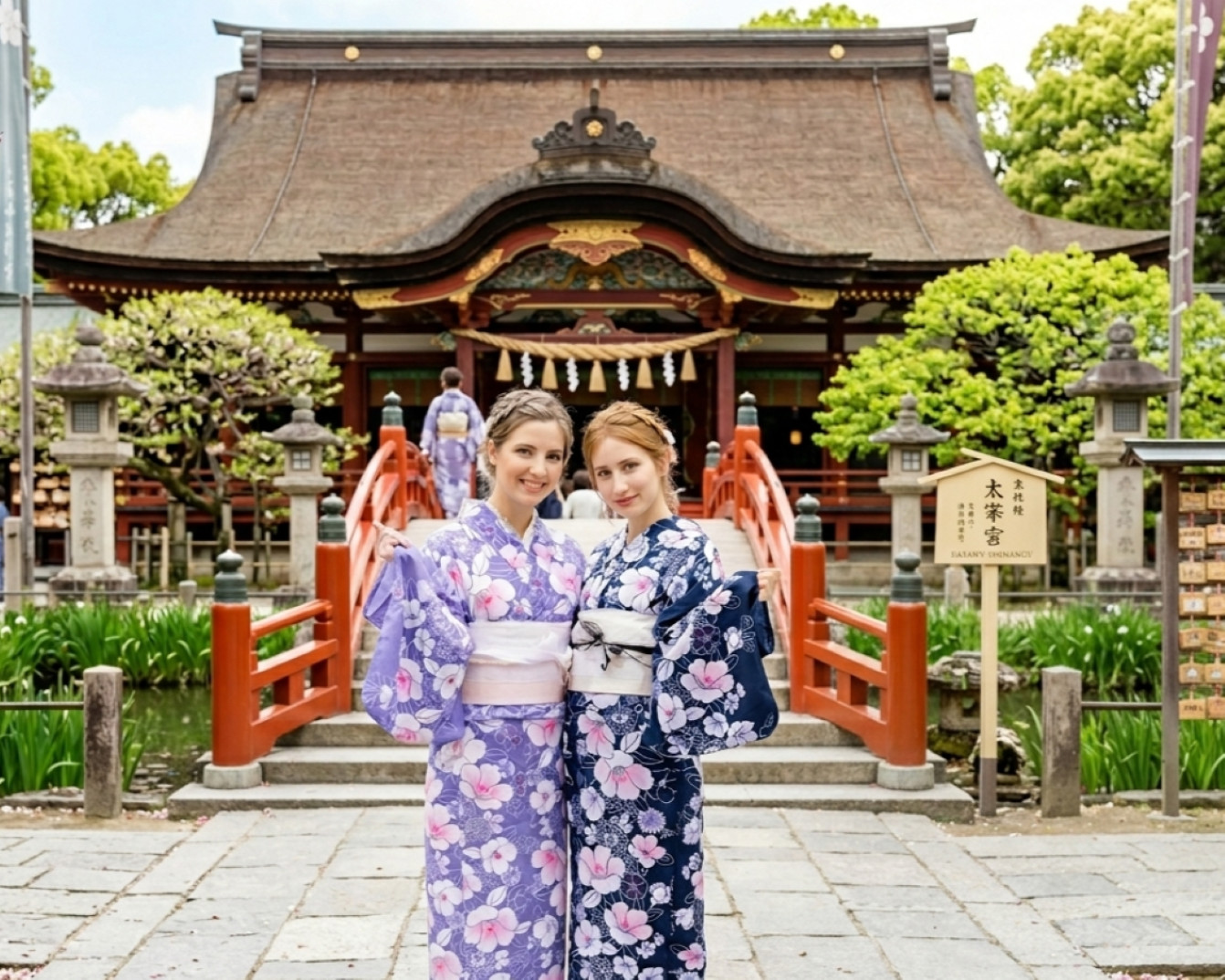
VASARA Kimono and Yukata Rental in Fukuoka

Tokyo: Make Your Own Chopsticks Shibuya
Enoshima: History,Culture,Views& 2h Hiking with a LocalGuide
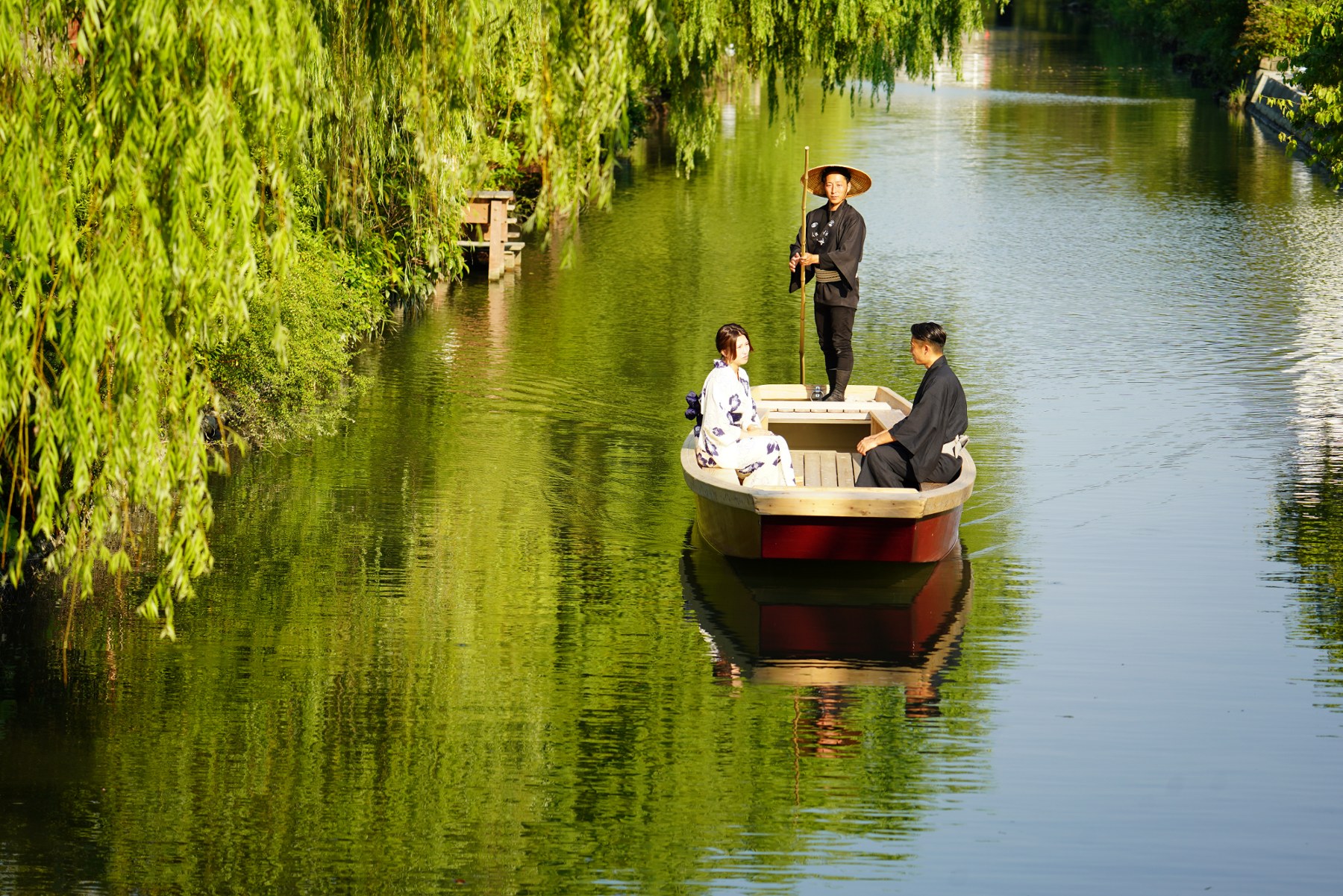
Yanagawa River Boating Experience (Shared/Private Course)
Richmond Hotel Premier Kyoto Shijo
save ¥13,556 vs sell price
Check rateHilton Tokyo Narita Airport
save ¥7,910 vs sell price
Check rateOriental Hotel Okinawa Resort & Spa
save ¥5,889 vs sell price
Check rate#first time#mistakes#budget travel
Frequently Asked Questions
What is the biggest money mistake first-timers make in Japan?
Buying the ¥50,000 nationwide JR Pass without doing route math. Most 7-to-10-day itineraries use ¥15,000 to ¥20,000 of trains, meaning the pass loses ¥30,000+ versus individual tickets and regional passes.
Should I exchange money before going to Japan?
Bring a small amount and withdraw the rest from 7-Eleven ATMs in Japan, which accept foreign cards at fair rates. Airport exchange counters at home and tourist exchange shops in Japan run 5 to 10 percent worse.
Do I need to tip in Japan?
No, never. Tipping is not practiced and often refused or causes confusion. Good service is the default. This makes Japan effectively 10 to 15 percent cheaper than equivalent Western travel.
Is it rude to eat while walking in Japan?
Mildly, yes, locals stand near the konbini or use eat-in counters. It costs nothing to follow, and it explains why there are no public trash cans: trash goes back to the store you bought from.