Thailand First Time Guide 2026: Routing & Timing
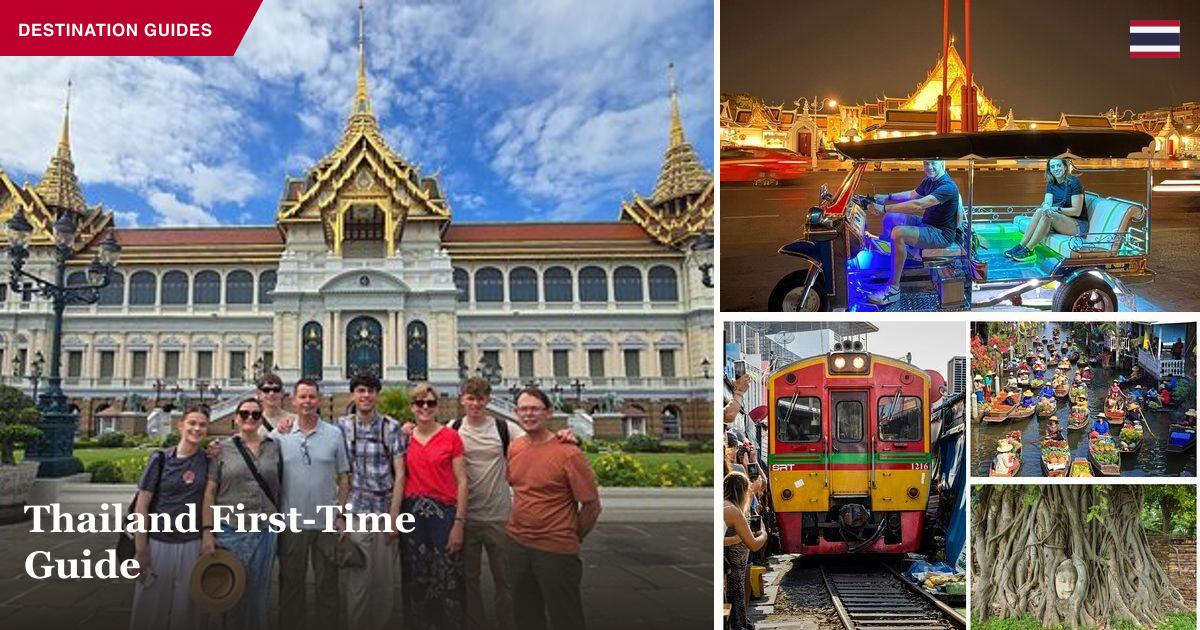
Thailand splits into three trip types: Bangkok culture, Chiang Mai’s north, and the southern islands. Most of what makes a first trip expensive or stressful comes down to two decisions: how much time you give each region, and which season you land in.
How many days do you actually need?
Seven days is enough for Bangkok plus one other region, done properly rather than rushed. Fourteen days is the sweet spot for the classic Bangkok–Chiang Mai–south combination, since domestic flights and overnight trains eat a half-day each way.
Anything less than a week means picking one region and accepting you’re skipping the rest. That’s not a failure, it’s just a different trip. A five-day Bangkok-and-Ayutthaya trip beats a rushed five-day attempt at all three regions.
For the full breakdown of what fits in each length, see 20 places you can’t miss on your first trip, split by 7-day and 14-day tiers.
When should you go?
Thailand’s seasons don’t move together across the country, and that changes your routing.
| Season | Months | What it means |
|---|---|---|
| Cool, dry | November–February | Best all-around window, mainland and islands both |
| Hot | March–May | Hot inland, especially Bangkok and Chiang Mai; still fine for beaches |
| Southwest monsoon | June–October | Rain on the Andaman coast (Phuket, Krabi); Gulf coast (Koh Samui, Koh Phangan) often drier |
If you’re traveling June through October and the islands are the priority, lean toward the Gulf coast over the Andaman side. Phuket and Krabi take the brunt of the monsoon; Koh Phangan usually doesn’t.
Bangkok, Chiang Mai, or the islands first?
Start in Bangkok. It’s where the international flights land, the BTS Skytrain and MRT subway make the first few days low-stress, and Ayutthaya’s ruins are a straightforward day trip north by train.
From Bangkok, the north-vs-south order depends on your season and flight path. Chiang Mai’s cooler hill air is a relief in the hot season; the islands make more sense in the cool dry months when the water’s calmest. Overnight trains connect Bangkok to Chiang Mai and to the southern rail line, a genuinely comfortable way to cover the distance without burning a travel day.
Where to stay in each base
| Base | Options | Pick this if |
|---|---|---|
| Bangkok | Sukhumvit vs. Khao San Road | Sukhumvit for BTS access and dining variety; Khao San for budget and backpacker energy |
| Chiang Mai | Old City | Walkable, moat-ringed, temples and night markets in reach on foot |
| Phuket | Patong vs. Kata/Karon | Patong for nightlife; Kata and Karon for quieter, more family-friendly beaches |
| Krabi | Ao Nang | Main base for Railay and Phi Phi boat access, more built up than Railay itself |
Sukhumvit is the easier first-timer base in Bangkok. Khao San is cheaper and louder, worth it if nightlife and backpacker logistics matter more to you than a quiet night’s sleep.
Trains, buses, or flights: the transport decision
Bangkok’s BTS and MRT cover the tourist core cheaply and skip the city’s traffic entirely, so plan routes around the nearest station rather than the nearest road. Songthaews, the shared pickup trucks, fill the gaps everywhere else, especially in Chiang Mai and smaller towns.
For the longer hops, overnight trains link Bangkok to Chiang Mai and to the southern line, and budget airlines (AirAsia, Nok Air) plus ferries handle the island routes. Compare the transport-plus-timing math before defaulting to a flight for every leg; a night train sometimes saves both a hotel night and the fare.
What to actually do first time
- Grand Palace & Wat Phra Kaew — Bangkok’s most-visited temple complex, home to the Emerald Buddha. Dress code is strictly enforced at the gate.
- Chiang Mai temples & elephant sanctuaries — Old City temple-hopping paired with ethical, no-riding sanctuary visits in the surrounding hills.
- Ayutthaya ruins — the former Siamese capital, an easy day trip north of Bangkok by train.
- Floating markets — Damnoen Saduak and Amphawa, the two classic boat-vendor markets near Bangkok, best done early morning before the tour buses arrive.
- Phi Phi Islands — Maya Bay and the limestone cliffs, usually a speedboat day tour from Phuket or Krabi.
- Railay Beach — boat-only access, and one of the region’s best spots for beginner-to-advanced rock climbing.
- Khao Sok National Park — ancient rainforest and a limestone-karst lake, a quieter jungle alternative if you’ve had enough beach.
Book the day tours on this list ahead of time rather than showing up and hoping. Viator carries the deepest inventory for them, Chiang Mai alone runs 120 listings covering the elephant sanctuaries, and Phuket and Krabi add another 100-plus between them for the Phi Phi and Railay side of the trip.
For the full landmark list grouped by city, see 15 iconic landmarks every tourist should see in Thailand. If zip lines, climbing, and trekking are more your speed than temple-hopping, the adventure and zipline park guide covers that angle specifically.
How the three regions actually differ
Before you split your days, it helps to see the three regions side by side rather than deciding city by city.
| Region | Pace | Signature draw | Ideal minimum |
|---|---|---|---|
| Bangkok | Fast, urban, BTS/MRT-connected | Grand Palace, temples, markets | 3 days |
| Chiang Mai & the north | Slower, hill-town | Old City temples, elephant sanctuaries, trekking | 3 days |
| The south (Phuket, Krabi, islands) | Beach and boat-tour paced | Phi Phi, Railay, island-hopping | 4 days |
Notice the south needs the longest minimum, mostly because getting between the mainland and the islands, and between islands, eats time that Bangkok and Chiang Mai don’t. Anyone building a 7-day trip should assume the south takes the biggest bite out of the schedule, not the smallest.
Before you go
Check the destination hubs for Bangkok, Chiang Mai, Phuket, Krabi, Koh Phi Phi, and Koh Phangan before you lock your route, and run through the packing list so temple dress code doesn’t catch you out at the gate.
The trip that works isn’t the one that hits every region. It’s the one where the season, the base, and the transport actually line up with each other.
Book these while you’re there

Bangkok & Ayutthaya: Private Tour with Baiyoke Lunch&Cruise


Private Tour to Railway Market, Floating Market And Ayutthaya
Walking Chinatown Speakeasy Bar Tour with Cocktails
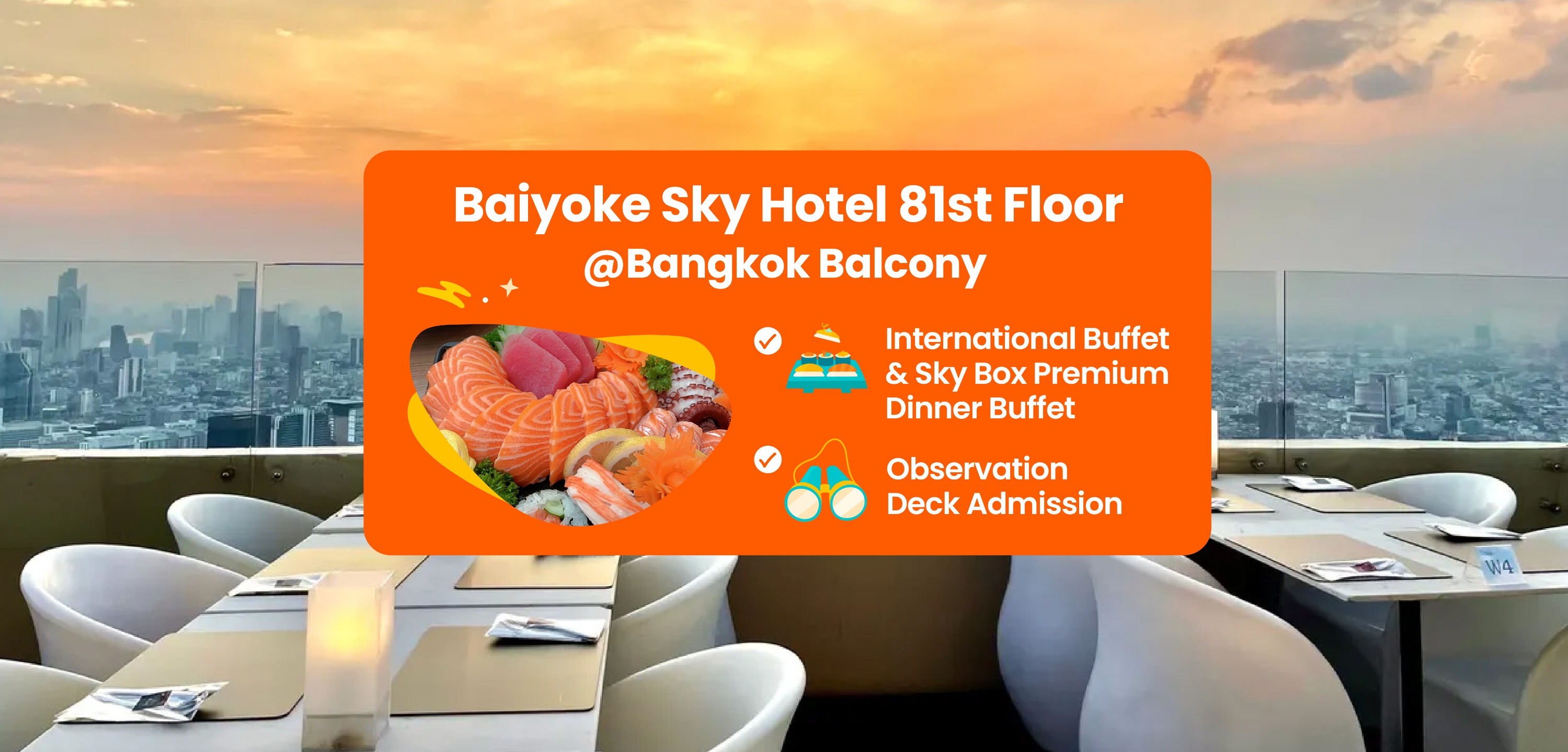
Baiyoke Sky Hotel Buffet and 81st Floor Ticket

Private Tour to Erawan Waterfall and Boat Tour in Kanchanaburi
Bangkok Street Food and Night Lights by Tuk Tuk

Sea Life Bangkok Ocean World Ticket
#thailand travel#first time thailand#bangkok#chiang mai#trip planning
Frequently Asked Questions
How many days do I need for a first trip to Thailand?
Seven days covers Bangkok plus one region well; fourteen lets you do Bangkok, Chiang Mai, and the south without rushing every transfer. Anything under a week means picking one city and skipping the rest.
What's the best time of year to visit Thailand?
November to February, the cool dry season, works for both the mainland and the islands. March to May is hot and better suited to early mornings and pool time, and June to October brings monsoon rain to the Andaman coast while the Gulf coast often stays drier.
Should I start in Bangkok or fly straight to the islands?
Start in Bangkok. It's the flight hub, the BTS and MRT make it cheap to get around, and Ayutthaya is a same-day train trip from there. Flying straight to an island skips the orientation and usually costs more in connecting flights.
Do I need a guide for temples like the Grand Palace?
No, but you do need the dress code sorted before you arrive: covered shoulders and knees, closed-toe shoes preferred. Guards turn people away at the gate for this more than for any other reason.