15 Iconic Landmarks Every Tourist Should See in Thailand
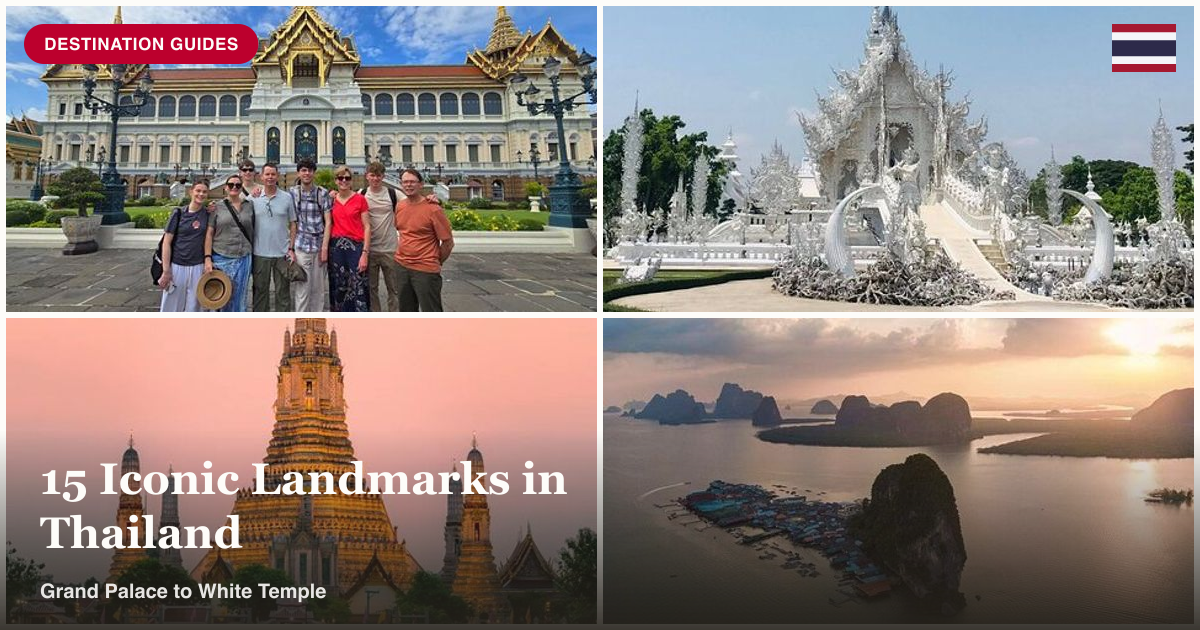
Fifteen landmarks cover Thailand’s three main circuits: Bangkok’s temples, Chiang Mai’s Old City, and the south’s islands and cliffs. Here’s the list grouped by where you’ll actually be standing.
Bangkok and day trips
Bangkok holds the highest concentration of must-see sites, and most sit within a short BTS or river-boat ride of each other.
- Grand Palace & Wat Phra Kaew — the most-visited temple complex in the country, home to the Emerald Buddha. Entry runs ฿500 ($15), gates open 8:30am with last admission mid-afternoon. Modest dress (covered shoulders and knees) is strictly enforced at the entry gate, no exceptions.
- Wat Arun — the Temple of Dawn, on the river’s west bank, best seen either at sunrise from across the water or up close by ferry crossing. Crossing to the temple grounds costs ฿200 ($6) entry.
- Wat Pho — home of the reclining Buddha, a short walk from the Grand Palace and easy to combine in one temple morning. Entry is ฿300 ($9).
- Chatuchak Weekend Market — one of the largest markets in the world, thousands of stalls across a genuine maze of a layout. Weekends only, so plan the day around it.
- Ayutthaya Historical Park — the former Siamese capital’s temple ruins, an easy day trip north of Bangkok by train. Give it a full day rather than bolting it onto a Bangkok temple circuit.
- Damnoen Saduak & Amphawa floating markets — the two classic boat-vendor markets near Bangkok. Go early morning; both quiet down and get more tour-bus heavy as the day goes on.
Verdict: If you only have one full day in Bangkok, pair the Grand Palace, Wat Pho, and Wat Arun, they’re close enough to do on foot and by river ferry. Save Ayutthaya and the floating markets for a second day each.
Chiang Mai and the north
Chiang Mai’s landmarks cluster around the moat-ringed Old City, with a couple of hillside exceptions.
- Wat Phra That Doi Suthep — the mountain temple overlooking the city, one of the most recognizable in the north. Entry is ฿33 ($1), open daily 6am-8pm; skip the 306-step naga staircase for a ฿50 ($1.50) funicular if the climb isn’t the point for you.
- Chiang Mai Old City temples — a walkable cluster of temples inside the moat, easy to cover on foot over a morning or afternoon.
- Elephant sanctuaries in the surrounding hills — ethical, no-riding sanctuary visits have become the standard here, a clear improvement over the riding camps of a decade ago.
- Sunday Walking Street — the weekly night market that runs through the Old City, food stalls and handicrafts stretching several blocks.
Verdict: The Old City temples and Sunday Walking Street cost nothing but time and pair naturally on the same trip. Budget a separate half-day for Doi Suthep and another for the elephant sanctuary, since both involve travel outside the city.
The south: islands and cliffs
The southern landmarks are less about single sites and more about the landscape itself.
- Railay Beach — a peninsula accessible only by boat, known for beginner-to-advanced rock climbing routes on its limestone cliffs.
- Phi Phi Islands & Maya Bay — the limestone cliffs and turquoise water made famous well before it became a mandatory stop, usually visited by speedboat day tour from Phuket or Krabi (see the Phi Phi day trip cost breakdown for both routes).
- Big Buddha, Phuket — the hilltop statue visible from much of the island’s south, a common half-day stop paired with viewpoints nearby.
- James Bond Island (Phang Nga Bay) — the limestone karst formations that gave the bay its nickname, typically seen as part of a boat tour through the wider bay (full James Bond Island tour pricing here).
- Khao Sok National Park — ancient rainforest and a limestone-karst lake, the south’s answer for travelers who want jungle instead of another beach day.
Verdict: Railay and Phi Phi are the two you shouldn’t skip if climbing or islands are on your list at all. James Bond Island and Khao Sok are worth it if you have the extra day; they’re not essential the way the first two are. Viator has the widest selection of boats for all four, 78 Phuket listings and 25 out of Krabi, well past what Klook currently lists for the south.
What didn’t make the list, and why
A few well-known names are missing on purpose. Koh Phangan doesn’t appear here because it’s primarily an activity and atmosphere destination rather than a landmark you photograph and move on from; it earns its own trip rather than a slot on a sightseeing list. Bangkok’s amusement and water parks are left off for the same reason they don’t headline any first-timer itinerary: they’re a half-day filler, not a landmark.
Timing also matters more than most lists admit. Wat Arun looks best from across the river at sunrise, before the heat and the crowds arrive; the Grand Palace is at its calmest in the first hour after opening. Floating markets lose their appeal fast after mid-morning once the tour buses fill the canals. If you’re building a day around any single item on this list, check what time of day actually suits it before locking the schedule.
How to sequence all 15
Trying to hit every landmark on this list in one trip means a lot of transit and very little actual time at each stop. A realistic first trip picks one region’s landmarks in full rather than skimming all three.
| If your priority is | Focus on |
|---|---|
| Culture and history | Bangkok’s temples + Ayutthaya |
| Nature and hiking | Chiang Mai’s Old City + Doi Suthep + Khao Sok |
| Islands and cliffs | Railay + Phi Phi + Phuket’s Big Buddha |
For a trip-length breakdown instead of a city-by-city one, see 20 places you can’t miss on your first trip, organized by whether you have 7 or 14 days. And if the goal is a broader first-timer orientation before you lock any of this in, start with the ultimate first-time Thailand guide.
The bottom line
Fifteen landmarks, three regions, one honest tradeoff: breadth costs you depth. Pick the region that matches what you actually want from the trip, culture, nature, or islands, and let the other two wait for next time. Check the Bangkok, Chiang Mai, Phuket, and Krabi hubs for the logistics once you’ve picked.
Entrance fees verified as of August 27, 2026.
Book these while you’re there
Bangkok & Ayutthaya: Private Tour with Baiyoke Lunch&Cruise


Private Tour to Railway Market, Floating Market And Ayutthaya
Walking Chinatown Speakeasy Bar Tour with Cocktails
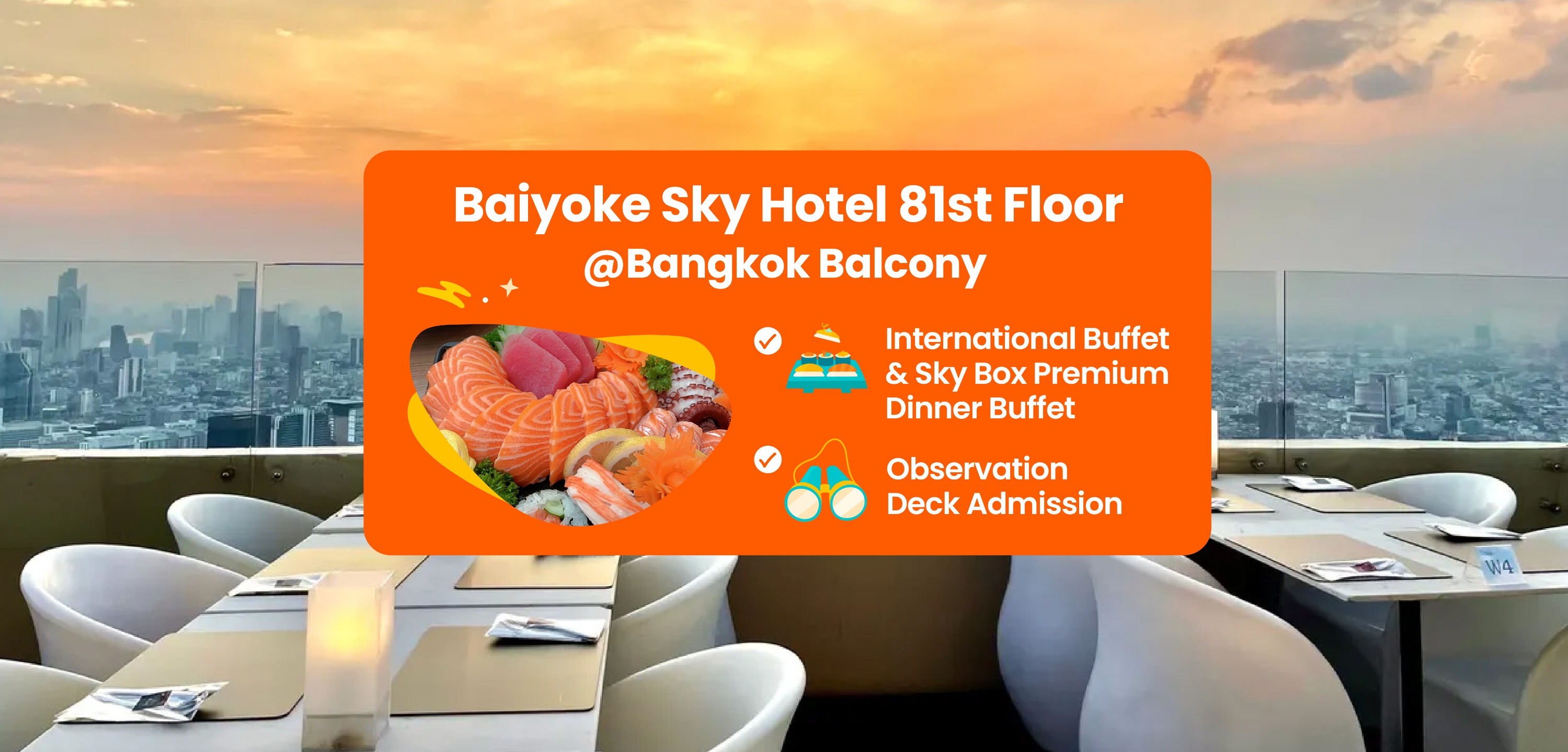
Baiyoke Sky Hotel Buffet and 81st Floor Ticket

Private Tour to Erawan Waterfall and Boat Tour in Kanchanaburi
Bangkok Street Food and Night Lights by Tuk Tuk

Sea Life Bangkok Ocean World Ticket
#thailand travel#bangkok#chiang mai#landmarks
Frequently Asked Questions
What is the single most iconic landmark in Thailand?
The Grand Palace and Wat Phra Kaew in Bangkok, home to the Emerald Buddha. It's the most-visited site in the country and the one every first-timer photograph shows.
Can I see Bangkok and Ayutthaya's landmarks in one day?
You can do Ayutthaya as a day trip from Bangkok by train, but pairing it with a full Bangkok temple circuit on the same day is rushing both. Give Ayutthaya its own day.
Are Chiang Mai's landmarks walkable, or do I need transport?
The Old City temples are walkable from most guesthouses inside the moat. Doi Suthep and the elephant sanctuaries are in the hills outside the city and need a songthaew or organized transfer.
Is Maya Bay still worth visiting?
Yes, but go in with the expectation of a boat tour, not a private beach day. The bay and Phi Phi's limestone cliffs are the draw; the crowds are part of the deal.