15 Must-Visit Attractions in South Korea
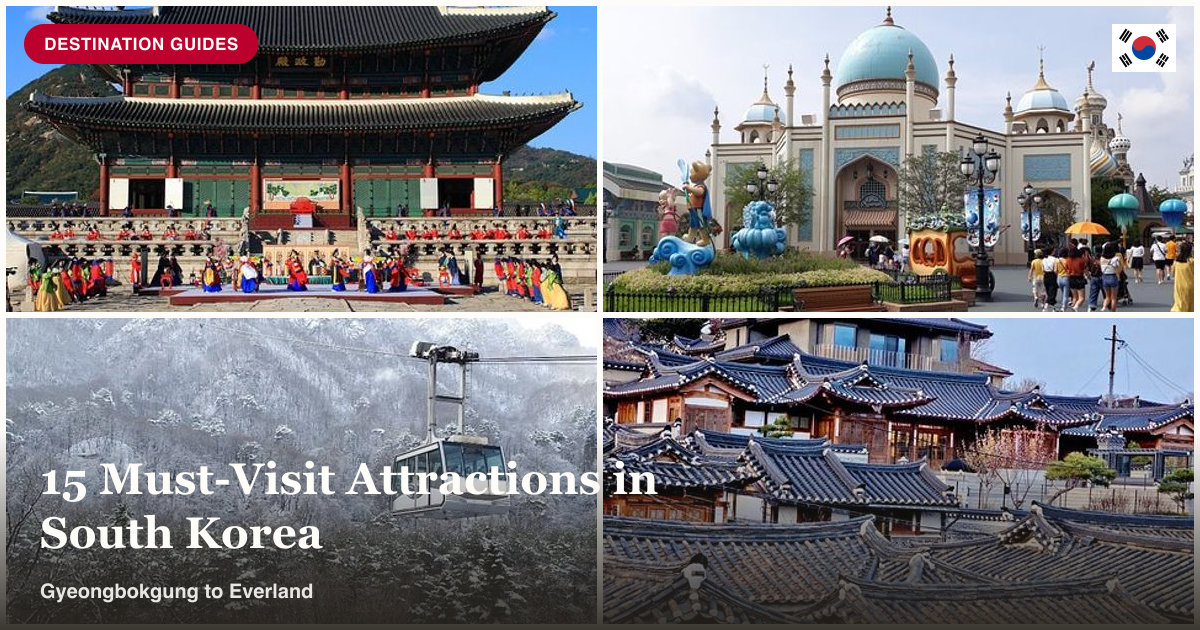
Gyeongbokgung Palace in Seoul is the single attraction most first-time itineraries are built around. Below is the fuller list grouped by city, so you can match attractions to whichever bases your route already includes.
Seoul
Gyeongbokgung Palace - Seoul’s biggest royal palace. Rent a hanbok (traditional dress) and entry is free, and it’s still the best photo backdrop in the city.
N Seoul Tower - reachable by cable car or a hike up Namsan, with the love-lock fence at the base doubling as a second stop.
Myeongdong - the densest street-food market in Seoul, with budget cosmetics shopping woven in between skewers and hotteok stalls.
Verdict: all three sit within a compact central zone. A single full day in Seoul can realistically cover the palace and Myeongdong; save N Seoul Tower for evening when the skyline view matters more.
Busan
Gamcheon Culture Village - a hillside neighborhood of pastel-painted houses, murals, and small galleries above Haeundae Beach.
Haeundae Beach - Busan’s main beach neighborhood, dense with hotels and seafood restaurants, and the default base if you’re staying overnight.
Jagalchi Fish Market - Korea’s largest seafood market, on the harbor near Busan’s old downtown.
Verdict: Gamcheon and Jagalchi pair well in a single day since they’re both on the older, western side of the city. Haeundae is more of an evening-and-sleep base than a daytime attraction in its own right.
Jeju Island
Hallasan - South Korea’s tallest peak, a volcanic summit that anchors the island’s interior.
Lava tube caves - underground cave systems formed by ancient volcanic flow, one of Jeju’s defining natural sights.
Waterfalls - Jeju’s volcanic terrain feeds a cluster of waterfalls around the island, a common half-day stop between other sights.
Verdict: budget a full 2-3 days for Jeju if you want all three properly. The lava tubes and waterfalls fit into a single day; Hallasan alone can take most of a day if you’re hiking rather than just viewing it.
Gyeongju
Bulguksa Temple - one of the country’s best-known Buddhist temples, and the anchor site for most Gyeongju day plans.
Seokguram Grotto - a stone Buddha grotto near Bulguksa, usually visited as a pair with the temple on the same trip up the mountain.
Historic tomb parks - Gyeongju’s old royal capital is dotted with grass-covered burial mounds scattered through the city center, walkable between other stops.
Verdict: Gyeongju rewards a full day on foot more than any other city on this list, the historic sites sit close enough together that you don’t need transit between them. If you’re coming from Busan without a car, Viator’s Seokguram Grotto day tour (₩96,102 ($64), 28 reviews, 5 stars) covers Bulguksa and Seokguram in one guided day.
Jeonju
Jeonju Hanok Village - one of the best-preserved traditional neighborhoods in the country, dense with hanok guesthouses, tea houses, and street food.
Traditional food street - Jeonju’s culinary reputation runs through the Hanok Village itself, where regional dishes are sold alongside the architecture.
Verdict: worth a dedicated stop if you care about food and architecture together, but it competes directly with Gyeongju for your time on a shorter trip. Pick Gyeongju for history density, Jeonju for food plus atmosphere.
Incheon
Incheon - the gateway city next to the country’s main international airport, with its own harbor district and a distinct architectural mix from decades as a port city.
Verdict: treat Incheon as an arrival or departure day, not a standalone base. It’s well-positioned for a half day before a flight, not for a dedicated multi-night stay unless you have a specific reason.
How much time each city actually needs
| City | Minimum time | Ideal time | Why |
|---|---|---|---|
| Seoul | 3 days | 5+ days | Biggest city, most attractions, main gateway |
| Busan | 2 days | 3 days | Compact, but Gamcheon and Jagalchi sit on opposite sides of downtown |
| Jeju | 2 days | 3-4 days | Attractions are spread across the island, not walkable between each other |
| Gyeongju | 1 day | 2 days | Dense historic core, mostly walkable |
| Jeonju | 1 day | 1-2 days | Hanok Village is compact, most of the appeal is in one neighborhood |
| Incheon | Half day | 1 day | Airport-adjacent, not a standalone multi-day base |
Seoul and Jeju are the two cities where “minimum” and “ideal” pull furthest apart, Seoul because there’s simply more of it, Jeju because its attractions require driving or bus transfers between them rather than a single walkable zone. Gyeongju is the opposite case, a single well-planned day covers most of what matters because the historic sites cluster tightly.
Matching attractions to your route
Seoul and Busan anchor most itineraries because KTX connects them directly in under three hours. Gyeongju and Jeonju both work better as detours off that main line, added if you have the days rather than forced into a tight schedule. Jeju sits apart entirely since it requires a short domestic flight, budget it as its own 2-3 day block rather than a day trip from anywhere else.
A common mistake on a first route: treating Gyeongju and Jeonju as equal-weight stops and splitting a route evenly between them. They’re not equal weight for every traveler. Gyeongju rewards history-focused travelers with the highest attraction density per day of any city on this list, while Jeonju rewards food-and-atmosphere travelers more than history buffs specifically. If you can only fit one, let that distinction decide it rather than picking whichever is easier to reach from your current base.
The T-money card that covers Seoul’s subway and buses works almost everywhere in the country, including local buses in Busan, Gyeongju, and Jeonju, so getting between attractions within a city rarely requires separate ticketing logistics beyond entry to each site itself. KTX and intercity buses handle the longer hops between cities. Budget your route around days, not transit friction, the local transit part mostly takes care of itself once you’re on the ground in each city.
For the broader first-timer list covering neighborhoods and day trips alongside these attractions, see 20 places you can’t miss on a first trip. If theme parks are part of your plan, our theme park comparison covers that separately since none of the above list counts as a theme park. And for the full logistics on getting between these cities, the ultimate South Korea travel guide has the transit and itinerary breakdown.
Book these while you’re there
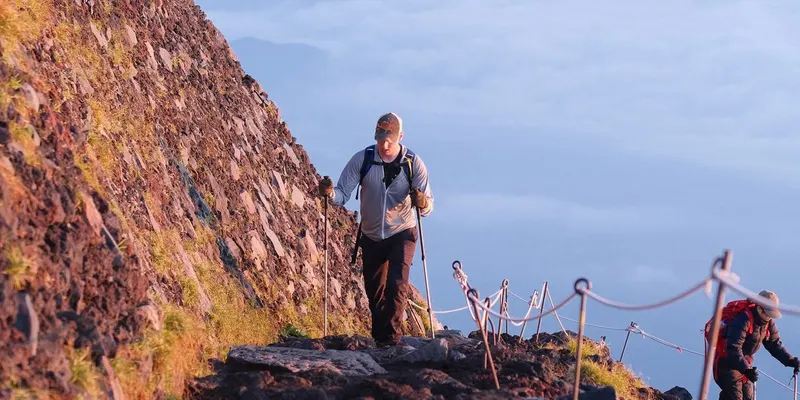
From Seoul: Seoraksan National Park & Sokcho Beach Day Trip
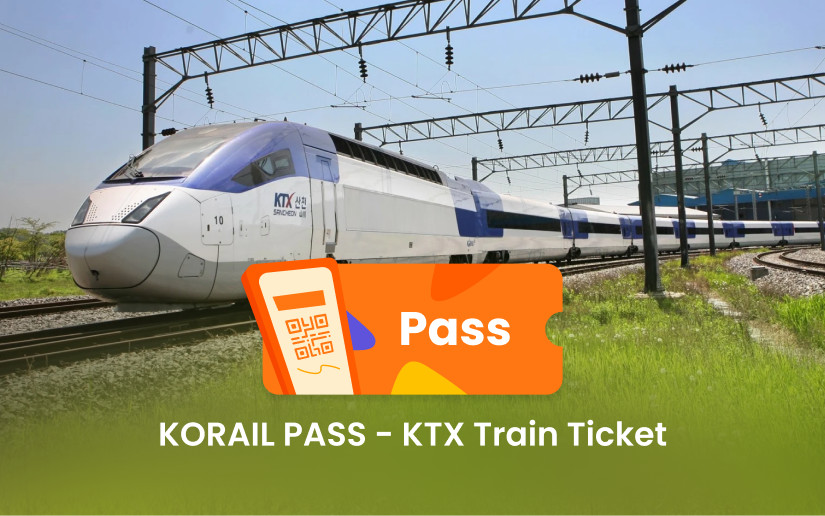
KORAIL PASS - KTX Train Ticket

Private DMZ Tour with North Korean Defector + N Korean Lunch
From Seoul:Seoraksan National Park and Sokcho Beach Day Trip

Seoul City Tour Bus Downtown Palace Namsan Hop-On Hop-Off Tours

Korean Cooking Class with Grocery Shopping at Seoul Local Market
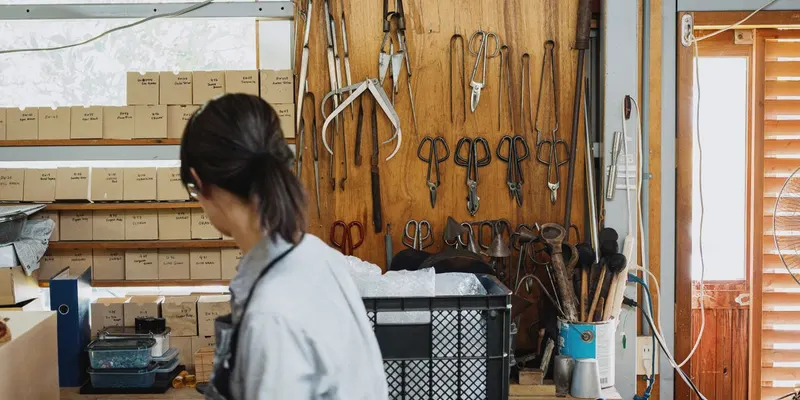
Seoul: Mother-of-Pearl Jewelry Workshop in Myeong-dong

Colorize Personal Color Analysis Makeup in Myeongdong Seoul
#south korea#attractions#seoul#busan
Frequently Asked Questions
What is the single best attraction in South Korea?
Gyeongbokgung Palace in Seoul, for the combination of scale, free hanbok-rental entry, and central location. It's the one attraction nearly every itinerary builds around.
Which city has the most attractions worth visiting?
Seoul, by volume, simply because it's the biggest city and the main gateway. But Gyeongju packs the highest attraction density per day of any city on this list, it's a compact historic capital built for walking between sites.
Is Jeonju worth a visit if you're short on time?
Yes, if food and traditional architecture matter to you, no if you're tight on days and have to choose between it and Gyeongju. Jeonju's Hanok Village is one of the best-preserved traditional neighborhoods in the country.
Do you need more than a day in Incheon?
No, for most itineraries. Incheon works as an arrival or departure day add-on rather than a standalone base, since it sits right next to the airport most international flights use.