Klook Sanrio & Legoland Tickets in Japan 2026
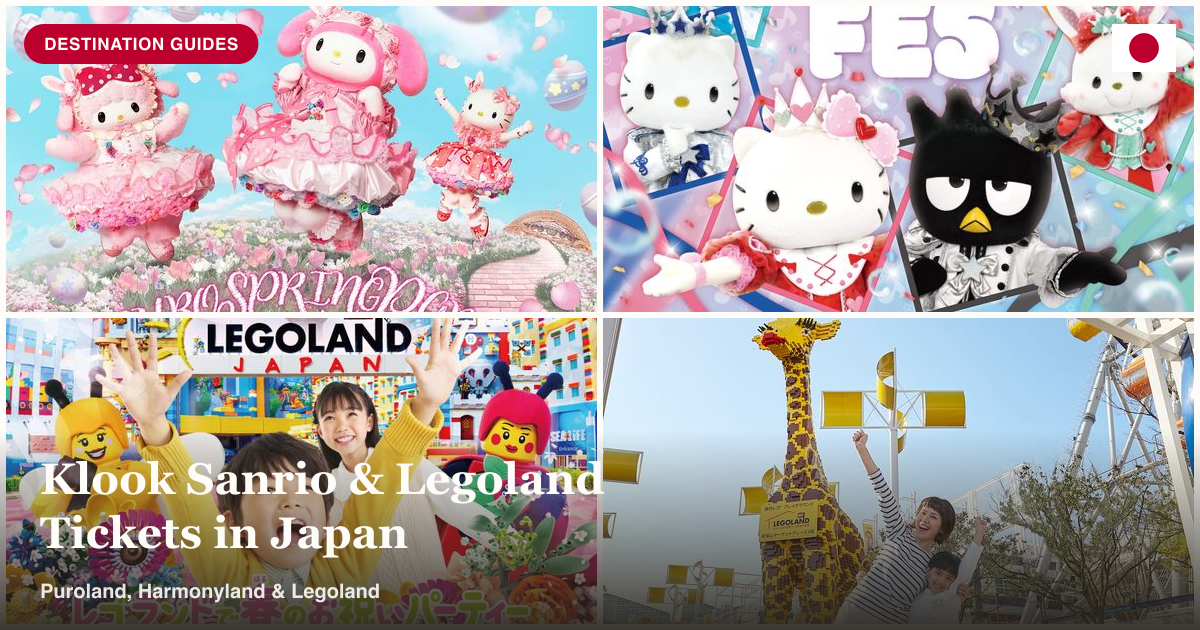
Japan’s family-theme-park tier runs cheaper and more compact than its headline Disney and USJ parks, and Klook covers a genuine spread across Sanrio’s character-driven parks and Legoland’s two very different Japan formats, from ¥1,108 ($6.85) to ¥4,490 ($27.75).
Verified: August 27, 2026.
Sanrio Puroland: the flagship, in Tokyo
Sanrio Puroland Tokyo Ticket (¥3,390 ($20.95)) is the largest and most established Sanrio park, an indoor, all-weather venue built around Hello Kitty and the wider Sanrio character roster, with theatrical shows and character meet-and-greets as much a draw as the rides themselves. Being indoor, it’s a genuine rainy-day option in Tokyo, unlike most theme parks that lose their appeal in bad weather.
Sanrio Harmonyland: the Kyushu alternative
Sanrio Harmonyland Ticket (¥3,163 ($19.55)) covers a more outdoor-oriented Sanrio park near Fukuoka, a genuine alternative for travelers on a Kyushu itinerary rather than a Tokyo-based trip. Priced close to Puroland but a different physical layout and regional focus, worth picking based on which part of Japan the rest of the trip covers rather than treating the two as interchangeable.
Sanrio characters Dream!ng Park: the compact option
Sanrio Characters Dream!ng Park (¥1,108 ($6.85)) is the cheapest booking in this entire guide, a smaller-scale Fukuoka attraction distinct from the larger Harmonyland park in the same general region. Worth it as a shorter, cheaper Sanrio fix if a full Harmonyland day doesn’t fit the itinerary.
Legoland Japan: the full outdoor park in Nagoya
LEGOLAND® Japan Ticket (¥4,490 ($27.75)) is the priciest booking here and the only full outdoor Legoland park in this list, built specifically for younger children, roughly ages 2-12, rather than an all-ages thrill destination. Set expectations accordingly: this is a compact, family-paced park compared to Legoland’s larger international locations, a half-day to full-day visit rather than a park that needs multiple days to cover.
Legoland Discovery Center Osaka: the compact indoor version
LEGOLAND Discovery Center Osaka Ticket (¥1,772 ($10.95)) is a genuinely different product from the full Nagoya park, a smaller, indoor, mall-based Lego play space with mini-rides and build areas, closer to a large indoor playground than an outdoor theme park. Don’t confuse the two when booking, the Discovery Center is a shorter visit (2-3 hours realistic) and a lower price point to match.
Choosing by region
Tokyo-based trip: Sanrio Puroland is the natural pick, indoor and centrally located. Kyushu/Fukuoka trip: Sanrio Harmonyland or the smaller Dream!ng Park, depending on how much time the itinerary allows. Nagoya or a broader Chubu-region trip: Legoland Japan for a full family park day. Osaka trip without time for a full park day: the Legoland Discovery Center fits as a shorter, mall-adjacent activity between other Osaka sightseeing.
Who these parks actually suit
Sanrio’s parks skew toward younger children and dedicated character fans of any age, the shows and meet-and-greets are the main draw over thrill rides. Legoland Japan suits families with kids roughly under 12, older kids and teens will likely find it paced too young compared to USJ or Fuji-Q. None of the parks in this guide are built for thrill-seeking older kids or adults without young children in the group, that audience is better served by USJ or Fuji-Q Highland instead.
Booking timing
These parks generally don’t require far-ahead booking the way Tokyo Disney can during peak season, same-week availability is realistic for most dates. Japanese school holiday periods (spring break, Golden Week, summer) see the heaviest domestic family crowds at all of these parks, worth booking a few days ahead and arriving early during those specific windows if avoiding the biggest crowds matters.
What a typical visit looks like
Sanrio Puroland runs largely as an indoor experience centered around scheduled theatrical shows, worth checking the day’s show times on arrival and planning the visit loosely around them rather than treating it as a pure walk-around park. Harmonyland, being more outdoor, follows a more traditional theme-park rhythm of rides and walkthrough attractions. Legoland Japan in Nagoya splits into themed zones by Lego world (similar in concept to other Legoland parks globally, just more compact), most families cover the full park comfortably in a single day without needing to rush.
Food and dining at each park
All of these parks offer on-site dining, though options and quality vary, Sanrio Puroland and Legoland Japan both carry themed character or Lego-branded food options alongside standard park fare, part of the draw for younger kids specifically. The smaller Discovery Center and Dream!ng Park locations have more limited on-site food, worth eating beforehand or planning a meal outside the attraction if visiting one of the compact options.
Combining a park visit with the surrounding city
Sanrio Puroland sits in Tama, a Tokyo suburb reachable by train, easily combined with a broader Tokyo day if timed for either morning or afternoon rather than a full day at the park alone. Legoland Japan sits near Nagoya’s waterfront, within reach of the city’s other attractions (Nagoya Castle, the Toyota museum) for travelers splitting a Nagoya stop between the park and the city itself. The Osaka Discovery Center’s mall location makes it an easy add-on to a broader Osaka shopping or sightseeing day rather than requiring its own dedicated day.
Booking window
None of these five attractions typically require far-ahead booking, same-week availability is realistic outside Japanese school holiday peaks (spring break, Golden Week, summer). Booking a few days ahead during those specific windows helps guarantee entry and skip any on-site ticket counter queue, though these parks rarely reach the sell-out pressure of Tokyo Disney during the same periods.
Photo and merchandise notes
Both Sanrio parks lean heavily into photo opportunities and character merchandise, worth budgeting extra time and yen beyond the ticket price if souvenirs are part of the appeal, official Sanrio merchandise inside Puroland and Harmonyland tends to be more extensive than what’s available at general retail stores elsewhere in Japan. Legoland Japan follows a similar pattern with its own branded Lego sets and build-your-own minifigure stations, a genuine draw for kids beyond the rides themselves.
Verdict
Sanrio characters Dream!ng Park is the cheapest, lowest-commitment Sanrio fix in this guide. Puroland and Harmonyland both deliver the full character-park experience depending on which region fits the trip. Legoland Japan is worth the full day for families with young kids specifically; the Discovery Center in Osaka is the better call for a shorter, lower-commitment Lego stop on a busier Osaka itinerary.
Prices verified as of August 27, 2026.
Book these while you’re there
From Osaka: Hiroshima and Miyajima Day Trip by Bullet Train
Kimono/Yukata Rental Experience (Osaka/Provided by Kawaii Osaka)

Samurai Training Experience KENDO in Osaka
From Osaka: Day Trip to Shirakawago & Kanazawa
Ninja Experience Cafe in Osaka Dotonbori

Osaka Sake Tasting & Takoyaki Cooking Experience
From Osaka: Himeji, Kobe and Nara trip
Ninja Experience and VR Game in Osaka
Richmond Hotel Premier Kyoto Shijo
save ¥13,556 vs sell price
Check rateHilton Tokyo Narita Airport
save ¥7,910 vs sell price
Check rateOriental Hotel Okinawa Resort & Spa
save ¥5,889 vs sell price
Check rate#sanrio#legoland#klook#family parks
Frequently Asked Questions
What's the difference between Sanrio Puroland and Sanrio Harmonyland?
Puroland (Tokyo) is Sanrio's flagship indoor park, home base for Hello Kitty and friends with theatrical shows and indoor rides. Harmonyland (Kyushu, near Fukuoka) is a smaller, more outdoor-oriented version of the same concept, worth choosing based on which region of Japan the trip covers.
Is Legoland Japan in Nagoya the same size as Legoland parks elsewhere?
Legoland Japan is generally considered more compact than the larger Legoland parks in Denmark, California, or Malaysia, built more toward younger children (roughly ages 2-12) than a full-day thrill park. Set expectations accordingly, it's a half-day to full-day family park, not an all-ages thrill destination.
What is a Legoland Discovery Center, and how is it different from Legoland Japan?
Discovery Centers (like the Osaka location) are smaller, indoor, mall-based attractions, essentially a compact Lego-themed play and mini-ride space, distinct from the full outdoor Legoland Japan park in Nagoya. Both are real, separate products on Klook, don't confuse the two when booking.
Is Sanrio characters Dream!ng Park in Fukuoka the same as Harmonyland?
No, they're different, smaller-scale attractions in the same general Kyushu/Fukuoka region. Dream!ng Park is a more compact experience; Harmonyland is the larger, more established Sanrio theme park. Check which specific listing matches the experience you want before booking.