Japan Etiquette Guide 2026: 25 Unspoken Rules
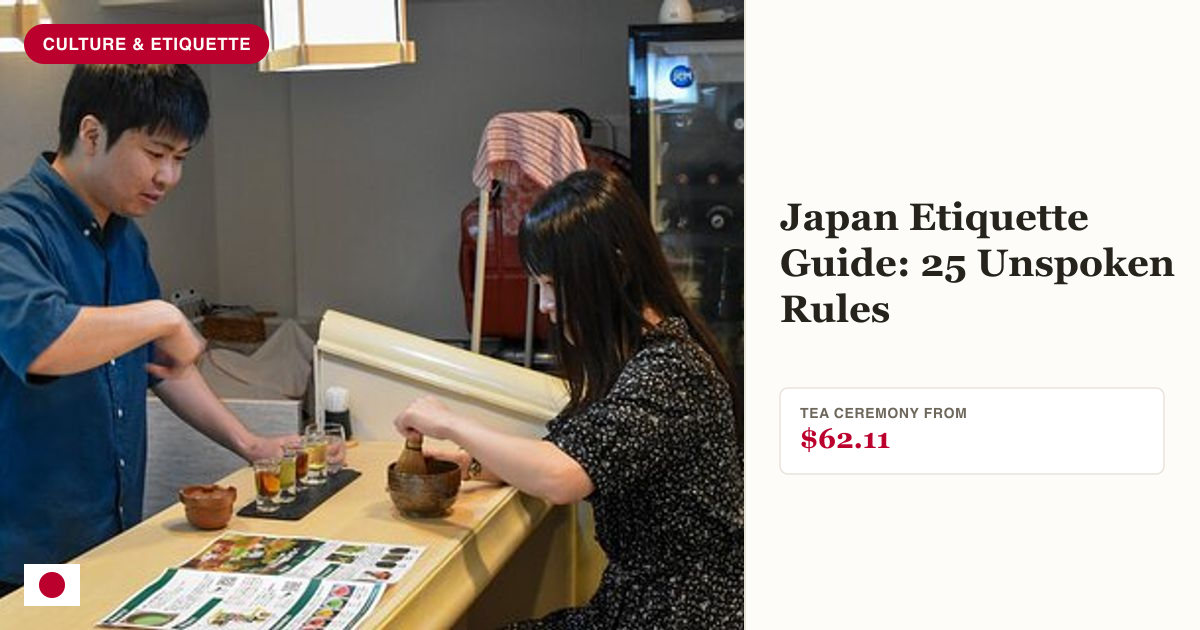
Twenty-five habits and small rules that separate a smooth trip from a string of minor, avoidable friction moments. None of these are legally enforced, all of them are genuinely noticed.
Verified: September 8, 2026.
Trains and buses: stay quiet, don’t block
- Silence on trains, especially phone calls. Text, don’t talk. This is the single most consistently broken rule by tourists.
- Stand on one side of the escalator, the non-walking side varies by region (left in Tokyo, right in Osaka), watch locals and match them.
- Let people off the train before boarding. Obvious everywhere, but rush-hour crowding makes it easy to forget.
- No eating on local trains (shinkansen and long-distance trains are the exception, ekiben bento are meant for exactly this).
- Priority seats are genuinely respected, don’t sit in them even if empty, unless you fall into the priority category yourself.
Chopsticks and the table: what’s off-limits
- Don’t stick chopsticks upright in rice. It resembles a funeral ritual and is considered genuinely bad form, not just quirky.
- Don’t pass food chopstick-to-chopstick. Same funeral-ritual association as above.
- Slurping noodles is fine, even encouraged. Loudly enjoying ramen or soba isn’t rude here, it signals you’re enjoying the food.
- Say “itadakimasu” before eating if you want the small gesture, it roughly means “I humbly receive,” said before the first bite.
- Don’t tip. Full explanation here, it’s not just unnecessary, it can create confusion.
- Pour drinks for others at the table, not yourself, someone will reciprocate, it’s a small mutual-care ritual at shared meals.
Onsen: wash first, no swimsuits, check tattoo rules
- Wash thoroughly before entering the bath. The bath itself is for soaking, not washing, this is one of the most important rules and the one most enforced by other bathers’ visible disapproval.
- Tattoos may bar entry at traditional onsen. Full etiquette and workaround guide here.
- No swimsuits in traditional onsen. Nude bathing is the norm; modern “family” or private-rental baths are the swimsuit-friendly alternative.
When to take your shoes off
- Remove shoes at genkan (entryways), homes, some restaurants, ryokan, and temples. Look for the shoe rack or step-up threshold as the visual cue.
- Slippers provided indoors are not for tatami rooms. Switch to sock feet or bare feet on tatami specifically.
- There’s often a separate pair of slippers just for the toilet. Don’t wear them back into the main room, an easy mistake for first-timers.
Trash, eating, and smoking in public
- Trash cans are rare in public, carry your trash until you find a bin (often near vending machines or konbini entrances) or a konbini itself.
- Don’t eat while walking, especially in crowded areas. Standing to finish food near where you bought it is the norm.
- Smoking is restricted to designated areas, not a blanket ban, but far more zoned than many countries, look for marked smoking areas rather than assuming street-smoking is fine.
- Queue, don’t crowd. Lines form naturally at train platforms, elevators, and popular food stalls, cutting or crowding stands out immediately.
Greetings, business cards, and reading the room
- A slight bow substitutes for a handshake in most situations, you don’t need to master the depth/duration nuance, a small nod-bow reads as respectful effort.
- Business cards (meishi) are exchanged with two hands, and read before being put away, relevant if your trip includes any business context.
- Avoid pointing at people directly, an open hand gesture toward something is more natural than a single finger point.
- Loud public arguments or displays of anger are rare and stand out sharply. Conflict resolution here leans toward quiet, indirect approaches, matching that tone avoids unwanted attention.
The pattern underneath all of it
Most of these rules trace back to two values: not disrupting shared space, and quiet consideration over explicit confrontation. Once you see that pattern, new situations become easier to navigate even without memorizing every specific rule.
Final thoughts
Nobody expects a tourist to get all 25 right, effort is what’s noticed, not perfection. Get the train silence, chopstick basics, and onsen washing-before-soaking right, and you’ve covered the rules most likely to actually draw attention. Related: train-specific etiquette, onsen rules in depth, and tipping.
Verified as of September 8, 2026.
Book these while you’re there
Experience the Soul of Hiroshima: A Peaceful Koto Workshop
Dazaifu Tenmangu Shrine, Yufuin Town, Beppu Ropeway, Kamado Jigoku (with complimentary onsen egg and lemon soda) | Departing from Fukuoka

Samurai Training Experience KENDO in Osaka
Tokyo: Nikko Day Trip with Lake Chuzenji Boat Ride
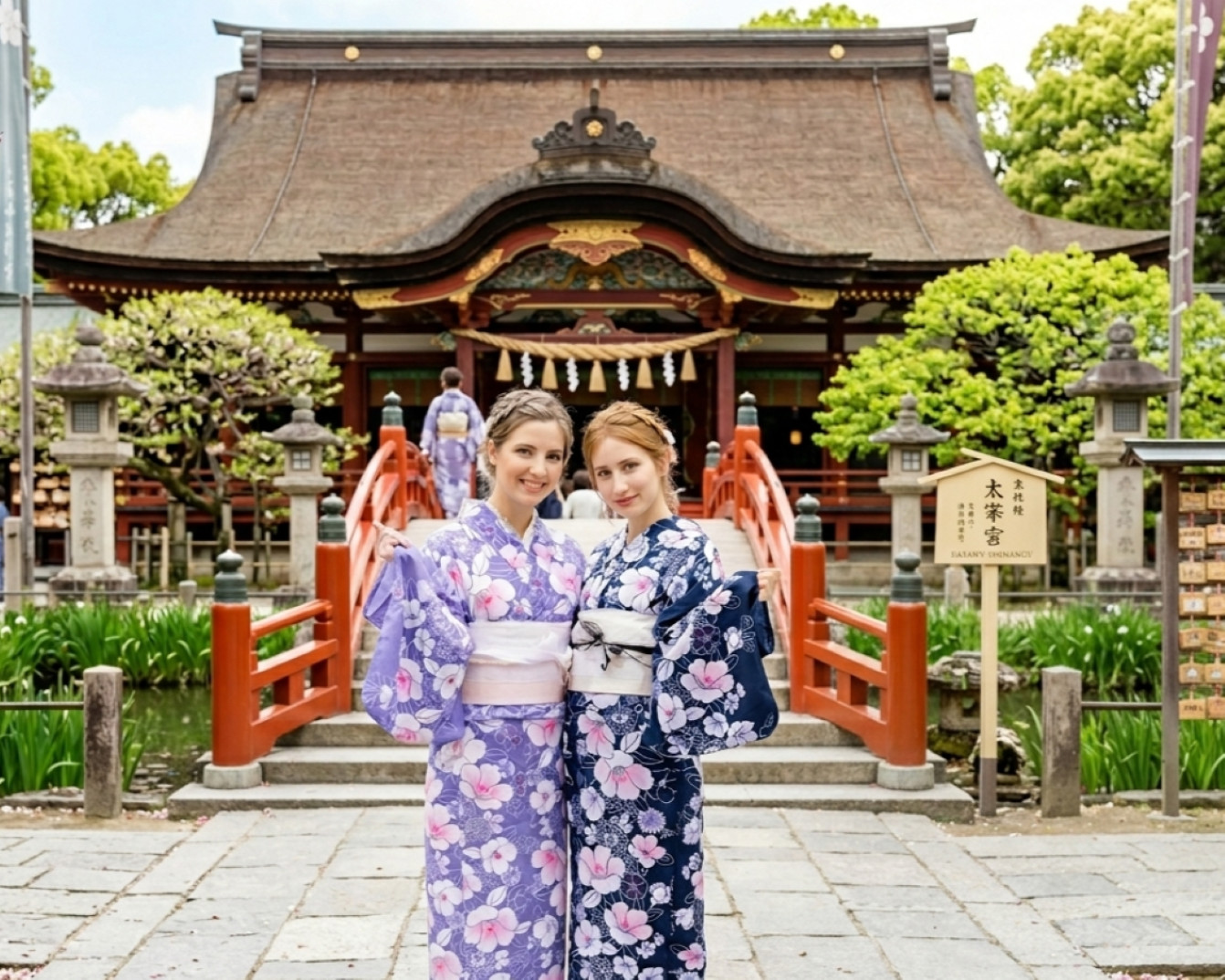
VASARA Kimono and Yukata Rental in Fukuoka

Tokyo: Make Your Own Chopsticks Shibuya
Enoshima: History,Culture,Views& 2h Hiking with a LocalGuide
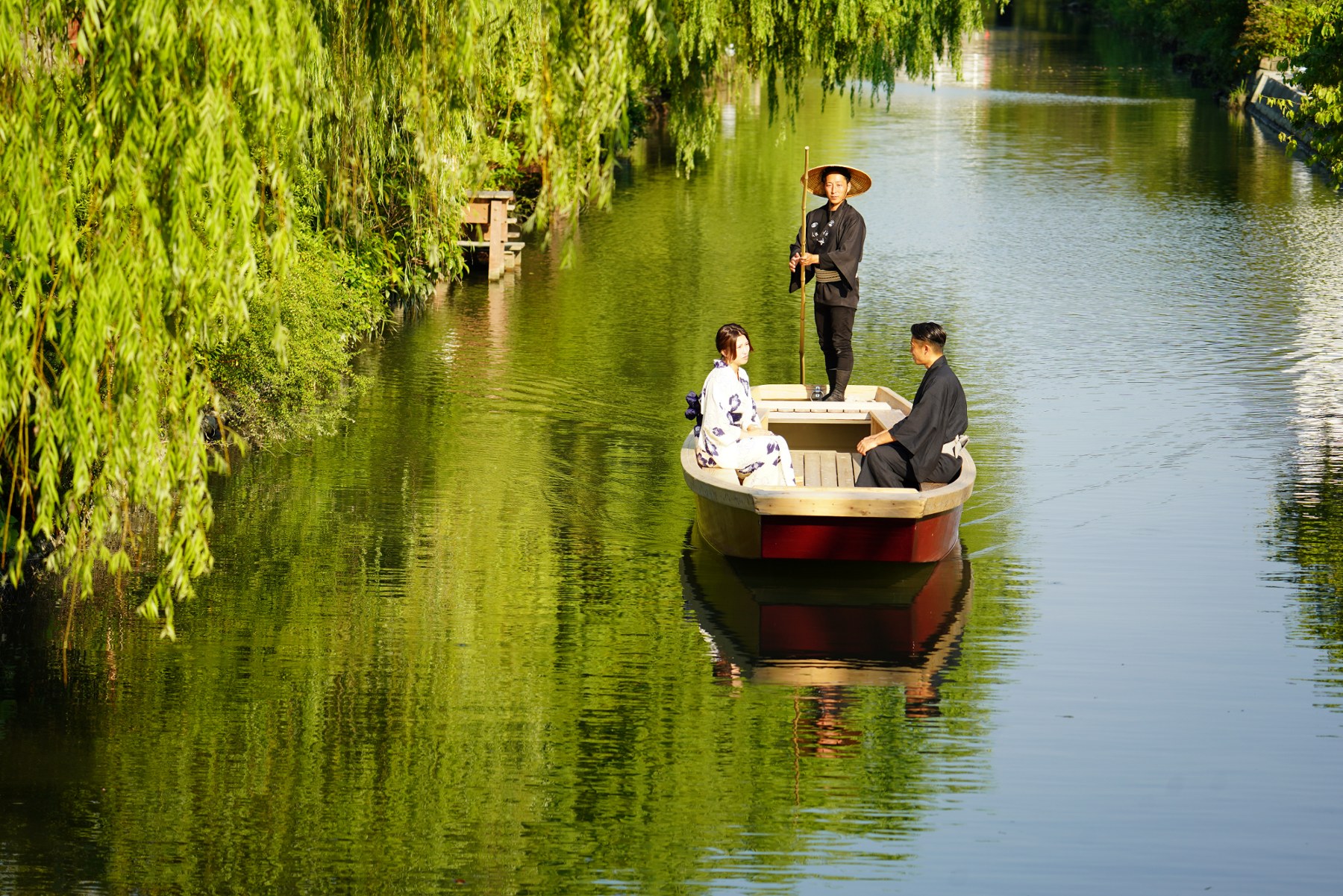
Yanagawa River Boating Experience (Shared/Private Course)
Richmond Hotel Premier Kyoto Shijo
save ¥13,556 vs sell price
Check rateHilton Tokyo Narita Airport
save ¥7,910 vs sell price
Check rateOriental Hotel Okinawa Resort & Spa
save ¥5,889 vs sell price
Check rate#etiquette#culture#first timer
Frequently Asked Questions
What is the biggest etiquette mistake foreigners make in Japan?
Talking loudly on trains, especially phone calls. It's not illegal and nobody will confront you, but it's the single most consistently noticed foreigner behavior, silence on public transit is a deeply held norm, not just a suggestion.
Do Japanese people actually care if foreigners break etiquette rules?
Mostly they're forgiving of visible tourists making honest mistakes, but effort is noticed and appreciated. Getting chopstick etiquette or bowing roughly right, even imperfectly, reads very differently than not trying at all.
Is it true you shouldn't tip in Japan?
Correct, and it goes beyond "not expected", tipping can actively confuse or mildly offend service staff. See our full breakdown on why, and the rare exceptions.