Thailand Customs and Etiquette: Unwritten Rules
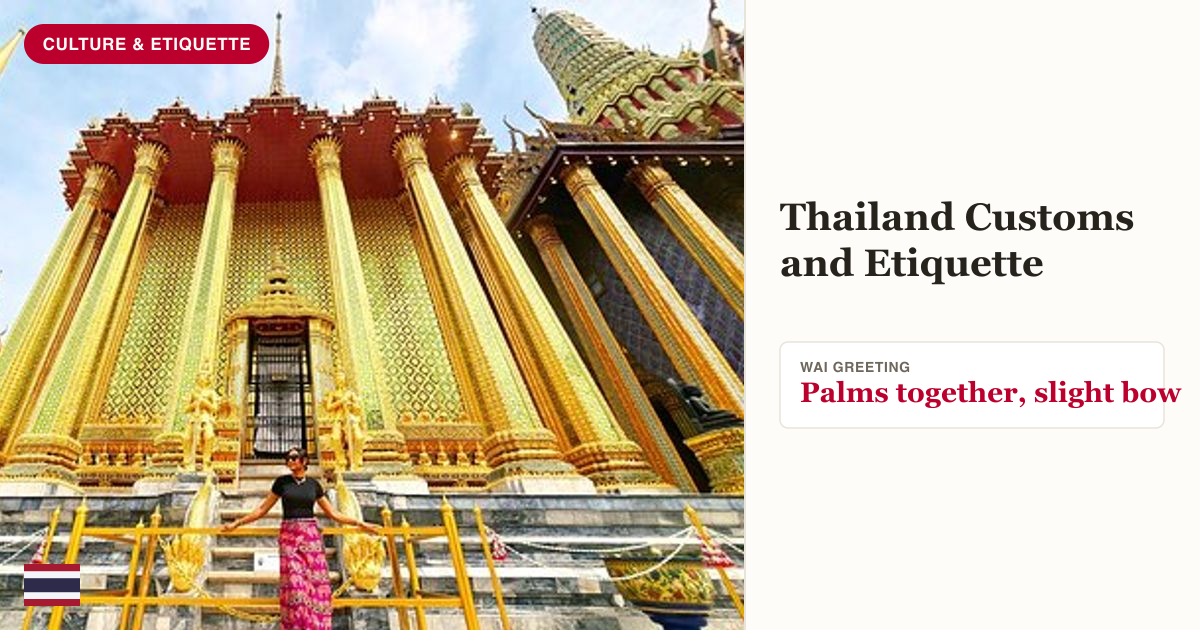
Thailand’s etiquette runs on a body-hierarchy logic, head high and sacred, feet low and disrespectful, that shapes far more daily behavior than it looks like from outside. None of it is hard to follow once the underlying logic clicks.
The wai: when to use it, when to skip it
The wai, palms pressed together at chest or chin height with a slight bow, is Thailand’s default greeting, but the rules on who initiates it matter more than the gesture itself. Younger people wai older people first, staff and service workers generally don’t expect a wai from a customer, and monks receive a wai without expecting one back. As a visitor, a smile and a small nod covers nearly every interaction, if someone wais you first, a light wai in return is polite, but don’t lead with one toward vendors or hotel staff, it can read as performative rather than respectful.
Temple etiquette: dress code and shoe removal
Every working Buddhist temple in Thailand expects covered shoulders and knees, sarongs are often available to rent or borrow at the entrance if you show up in shorts. Shoes come off before entering any building housing a Buddha image, look for the pile of shoes at the door as the cue rather than a posted sign. Buddha images themselves are treated as genuinely sacred, not decorative, don’t climb on one for a photo or turn your back to one while posing. Women should be aware that some temples restrict direct contact with monks, and a monk may decline to accept anything handed directly from a woman’s hand, placing an item on a cloth instead is the standard workaround.
Monarchy respect: the one area with real legal weight
Thailand’s monarchy holds a level of public respect backed by actual law, lese-majeste, insulting the King, Queen, or heir, carries serious legal penalties, and this isn’t a soft cultural norm to shrug off as overly cautious advice. It extends to practical details tourists don’t expect: Thai banknotes carry the King’s portrait, so stepping on a dropped note (even to stop it blowing away) is treated as a real insult, pick it up by hand instead. Standing during the royal anthem, played before movies in cinemas, is expected without exception. Skip joking commentary about the royal family entirely, including online, this is the one area of Thai etiquette where the stakes go well beyond an awkward social moment.
Feet: the lowest point, treated accordingly
Thai body-hierarchy logic runs head-high, feet-low, and it explains a cluster of etiquette rules that otherwise seem unconnected. Never point the soles of your feet at a person, a Buddha image, or a monk, tuck them backward or to the side when sitting on a temple floor. Never step over someone sitting or lying down, even briefly, walk around them instead. Touching someone’s head, including a child’s, uninvited runs the opposite direction of the same logic, the head is the most respected part of the body, casual contact there reads as genuinely disrespectful rather than merely rude.
Street food and market manners
Thailand’s street food culture runs on quick, functional transactions, order, pay, eat, move on, rather than lingering conversation with the vendor. Queue where a queue exists rather than crowding the counter, and expect small stools or shared tables at busy stalls, sitting down next to strangers at a communal table is normal, not an intrusion. Bargaining is expected at markets selling clothes, souvenirs, and non-food goods, but not at food stalls, where prices are fixed and haggling over a ฿33 ($1) plate of pad thai reads as genuinely out of place.
Tipping: appreciated, not traditionally required
Tipping isn’t a deep-rooted Thai custom the way it is in the US, but tourist-facing restaurants, tour guides, and massage therapists increasingly expect a small one given how much of Thailand’s economy now runs on international visitors. Rounding up a taxi fare or leaving 20-40 Baht for a massage is common and welcomed. Upscale hotels and restaurants often add a service charge directly to the bill, check before adding a tip on top of a charge that’s already covering it.
Shoes off, and where it actually matters
Beyond temples, removing shoes before entering a home is close to universal, and many small guesthouses and some restaurants extend the same expectation, look for a shoe rack at the entrance as the signal. It doesn’t apply in malls, chain restaurants, or most shops, the rule is specifically homes, temples, and some traditional-style businesses, not a blanket rule for every indoor space.
What surprises most first-time visitors
The gap between Bangkok’s fast-paced, visibly Western-influenced surface and the depth of the customs underneath catches most first-timers off guard, a 7-Eleven on every corner sits a block from a temple where the dress code and shoe rules are taken completely seriously. Public displays of anger are read far more negatively here than in many Western cultures, raising your voice at a vendor or driver over a mistake, even a genuine one, tends to make things worse rather than resolve them faster. Staying calm and smiling through a frustrating moment, sometimes called “jai yen” (cool heart), is the more effective way to actually get a problem fixed.
The honest summary
None of Thailand’s etiquette is complicated once the underlying logic is clear: respect flows from head to feet, the monarchy carries real legal weight, and a calm, unhurried manner gets further than visible frustration ever does. Follow the temple dress code, keep your feet down and your voice level, and the rest follows naturally across a first trip. For the practical side of a first Thailand visit, see visiting Thailand for the first time, and for the best season to time it around, check the best time to visit Thailand.
Guide updated as of September 8, 2026.
Book these while you’re there
Phuket:City Tour,Big Buddha, Forest Safari Tiger Park Canopy


Cooking Class by Samui Native Instructor Geng and O Family
Bangkok & Ayutthaya: Private Tour with Baiyoke Lunch&Cruise
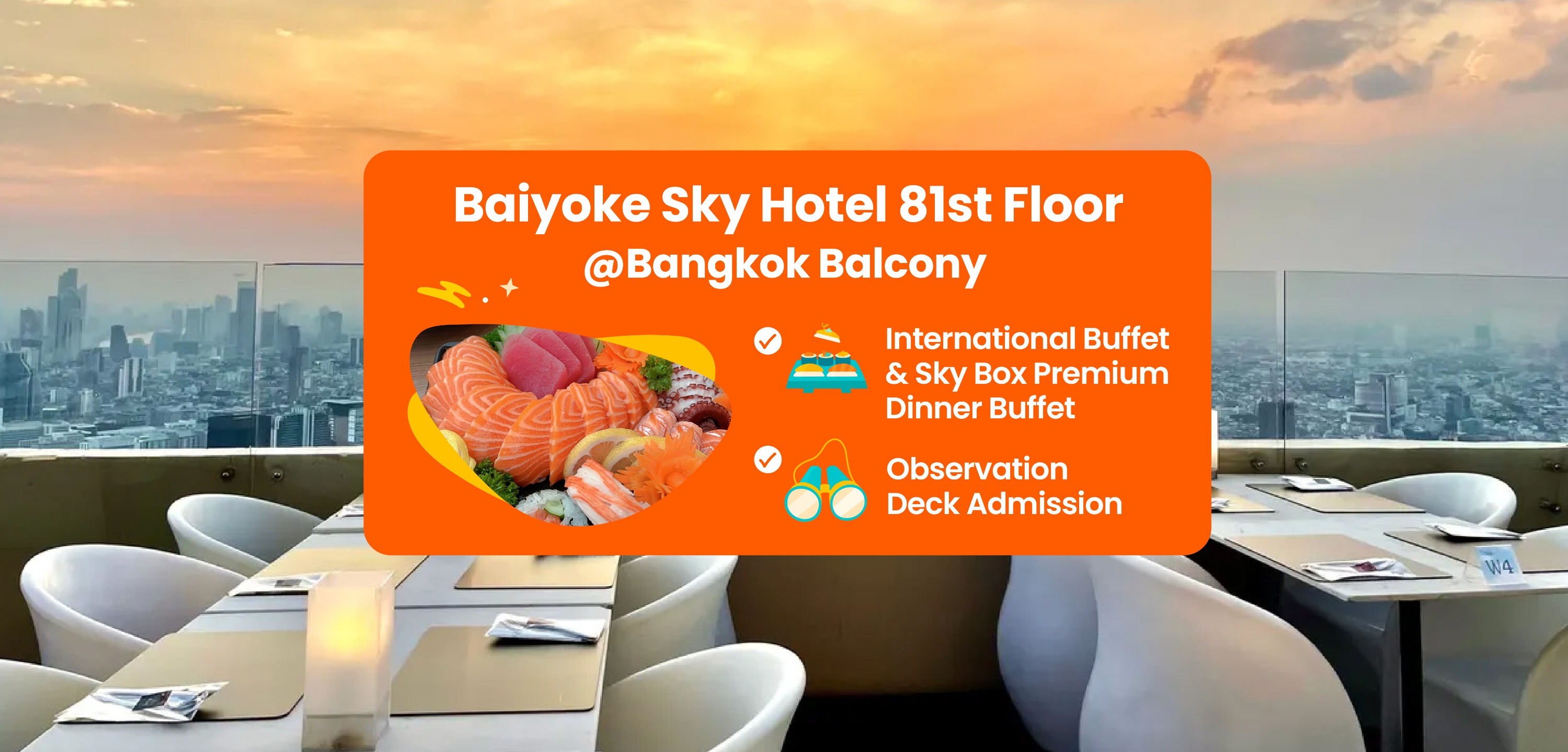
Baiyoke Sky Hotel Buffet and 81st Floor Ticket

4 in 1 Elephants Long Neck Rafting and Sticky Waterfall Tour
Krabi: 4 Islands Premium Longtail Boat Tour with Lunch

Sea Life Bangkok Ocean World Ticket
Frequently Asked Questions
Do I need to return the wai greeting?
As a visitor, no, a smile and a small nod is enough. If someone offers a wai first, a light wai back is appreciated but not required. Don't initiate one to service staff or vendors, it can read as overly formal or even mocking in that context.
What happens if I disrespect the Thai monarchy?
Thailand enforces lese-majeste laws seriously, and this extends to currency (Thai banknotes carry the King's portrait) and public commentary. Don't step on a dropped banknote to stop it blowing away, pick it up instead, and avoid any joking commentary about the royal family in public or online.
Do you tip in Thailand?
Not traditionally required, but increasingly appreciated in tourist-facing restaurants and for tour guides. Rounding up a bill or leaving small notes for a massage or a driver is common; upscale restaurants sometimes add a service charge already, check the bill before tipping on top of it.
Why do Thai people avoid pointing their feet at things?
Feet are considered the lowest, least respectful part of the body in Thai culture, the head is the highest. Never point your feet toward a person, a Buddha image, or a monk, and never step over someone sitting or lying on the ground, walk around instead.