Getting Around South Korea: T-money, KTX & Subway Guide
T-money covers city buses and subways nationwide on one card, KTX covers the long hops between cities in under three hours for the busiest routes, and intercity buses fill in everywhere KTX doesn’t reach directly. This guide goes deeper on the mechanics of each than a general itinerary post does, specifically the subway line logistics, KTX fare tiers, and airport transfer options that actually decide how a travel day goes.
T-money: one card, the whole country
Buy a T-money card at any convenience store (GS25, CU, 7-Eleven) or subway station kiosk on arrival, then load it with cash or a linked card at the same kiosks. It works on subway systems in Seoul, Busan, Daegu, and Gwangju, on city buses nationwide, and on most taxis. Reload as you go rather than trying to estimate a lump sum upfront, kiosks are everywhere and reloading takes under a minute.
Verdict: buy this in your first hour on the ground and never think about city-transit payment again for the rest of the trip.
Seoul’s subway: lines, transfers, and the exit-number system
Seoul’s subway runs to more than 20 lines counting suburban extensions, but a first-timer really only needs to know a handful: Line 1 (dark blue) runs the oldest north-south spine through Seoul Station and City Hall; Line 2 (green) is the loop line connecting Hongdae, Gangnam, and Jamsil; Line 3 (orange) and Line 4 (light blue) cross the center and reach Gyeongbokgung Palace and Myeongdong respectively; Line 9 (gold) is the fast Gangnam-to-Gimpo Airport express line, useful specifically for that route.
Every station exit is numbered, and Naver Map or Kakao Map will tell you the exact exit number for your destination, this matters more in Seoul than in most cities since exits at major interchanges can be a genuine 5-10 minute walk apart from each other. Google Maps’ Korea transit directions are unreliable, use one of the two local apps instead.
Verdict: learn Lines 1, 2, 3, 4, and 9 by color, download Naver Map or Kakao Map before you land, and always check the exit number, not just the station name.
KTX: fare tiers and booking mechanics
KTX (Korea Train eXpress) runs on a standard/first-class split, standard class covers nearly every traveler’s needs, first class adds wider seats and quieter cars for roughly 40-50% more. Seoul to Busan runs under three hours in standard class; Seoul to Gyeongju or Jeonju connections typically require one transfer since neither sits directly on the main KTX spine. See Seoul to Busan by KTX, flight, and bus for the full cost and time breakdown on that specific route.
Book through Korail’s official site or app, or through a Klook-sold KTX ticket activity for a simpler checkout in English, both issue the same seat inventory. Taking multiple KTX legs across the trip? Check whether the KR Pass is worth it before buying individual tickets. Standard weekday travel needs two to three days of lead time; spring cherry blossom season, autumn foliage weekends, and any Korean public holiday (especially Chuseok and Lunar New Year, when the entire country travels at once) can sell out a week or more ahead, book those windows as early as your dates are confirmed.
Verdict: default to standard class, book early for any date that overlaps a Korean holiday or foliage season, and don’t assume same-week availability during those windows the way you can the rest of the year.
Intercity buses: where KTX doesn’t reach
Gyeongju, Jeonju, and smaller cities off the main KTX spine are usually faster and just as cheap by intercity bus, or by bus plus a short KTX-connected transfer, than forcing a KTX-only route. Korea’s intercity bus terminals (express bus terminals specifically, not just any city bus stop) run frequent departures on popular routes, and tickets are bookable same-day at the terminal or a few days ahead through Korail-adjacent booking apps.
Verdict: default to KTX for Seoul-Busan and other main-spine routes, default to intercity buses for Gyeongju, Jeonju, and anywhere off that spine, don’t force a KTX transfer when a direct bus covers the same ground faster.
Airport transfers: Incheon and Gimpo
Incheon International Airport (ICN) serves nearly all international arrivals and connects to Seoul via AREX (Airport Railroad Express), either the all-stop train (cheapest, more stops, roughly an hour to Seoul Station) or the express train (fewer stops, faster, priced higher). Airport limousine buses run directly to major hotel districts and cost more than AREX but save a transfer if your hotel isn’t near an AREX station. Gimpo Airport (GMP), used mostly for domestic flights and some regional international routes, connects directly onto subway Line 9 and Line 5, no separate airport rail system needed.
Verdict: AREX all-stop for the lowest cost if your hotel is near a station on that line, airport limousine bus if it’s not, and don’t overthink Gimpo, it’s already on the regular subway network.
Taxis: when they’re actually worth it
Seoul and Busan’s subway networks are extensive enough that most visitors rarely need a taxi inside either city, but taxis are worth it late at night after subway service ends (roughly midnight to 5:30am in Seoul), with luggage between a hotel and the nearest station, or for a short hop where waiting for a bus or subway transfer costs more time than it saves. T-money works on most taxis directly, no separate cash transaction needed. Avoid relying on taxis as your default city transport, Korea’s traffic in both Seoul and Busan can make a short taxi ride slower than the equivalent subway trip during rush hour.
Verdict: taxis are the after-midnight and luggage-heavy option, not the default, the subway wins on speed and cost for nearly everything else inside either city.
Putting it together: a realistic multi-city transit day
A Seoul-to-Busan travel day looks like this: T-money-covered subway or taxi to Seoul Station, KTX standard class to Busan (under three hours), then T-money-covered subway or bus from Busan Station to your hotel. No separate ticketing system to learn at any step beyond the one KTX booking itself. Adding Gyeongju or Jeonju to that route means either an intercity bus leg or a KTX-plus-transfer combination, budget extra time specifically for the transfer, not just the total distance.
How this differs from the general itinerary guide
The ultimate South Korea travel guide covers T-money and KTX at the level a first-time itinerary needs, enough to plan how many days and which cities. This guide goes deeper into the actual mechanics, which subway lines matter, how KTX fare classes work, when intercity buses beat the train, and the specific AREX and Gimpo airport logistics, for anyone who wants the transit layer solved in detail before landing. Pair this with the pre-trip checklist for the full arrival sequence, T-money purchase, map app download, and first KTX booking all happen in roughly that order.
Transit details verified as of August 6, 2026.
Book these while you’re there

From Seoul: Seoraksan National Park & Sokcho Beach Day Trip
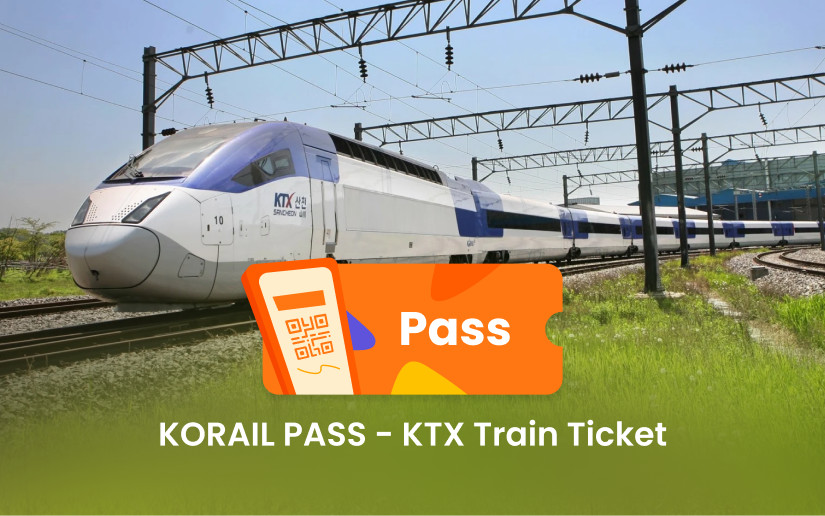
KORAIL PASS - KTX Train Ticket

Private DMZ Tour with North Korean Defector + N Korean Lunch
From Seoul:Seoraksan National Park and Sokcho Beach Day Trip

Seoul City Tour Bus Downtown Palace Namsan Hop-On Hop-Off Tours

Korean Cooking Class with Grocery Shopping at Seoul Local Market
Seoul: Mother-of-Pearl Jewelry Workshop in Myeong-dong

Colorize Personal Color Analysis Makeup in Myeongdong Seoul
#south korea#transportation#t money#ktx
Frequently Asked Questions
How far ahead should you book KTX tickets?
Two to three days ahead for a standard weekday trip, one to two weeks ahead for spring cherry blossom season, autumn foliage, or any Korean public holiday, when Seoul-Busan seats sell out well before departure.
Is the KTX or an intercity bus better between Seoul and Busan?
KTX, for that specific route, it's under three hours versus 4-5 hours by bus at a similar or lower price once you book a non-premium KTX seat class. Buses win on routes KTX doesn't reach directly, like Gyeongju or Jeonju.
Do you need a different T-money card in each city?
No, one T-money card works nationwide across Seoul, Busan, Gyeongju, Jeonju, and most other cities' local buses and subways. Reload it as needed rather than buying a new one per city.
What's the cheapest way from Incheon Airport into Seoul?
The AREX all-stop train, cheaper than the express version or a taxi, though it takes longer with more stops. The express AREX train and airport limousine buses cost more but save real time if your hotel isn't near an all-stop station.