15 Hidden Gems in the Philippines
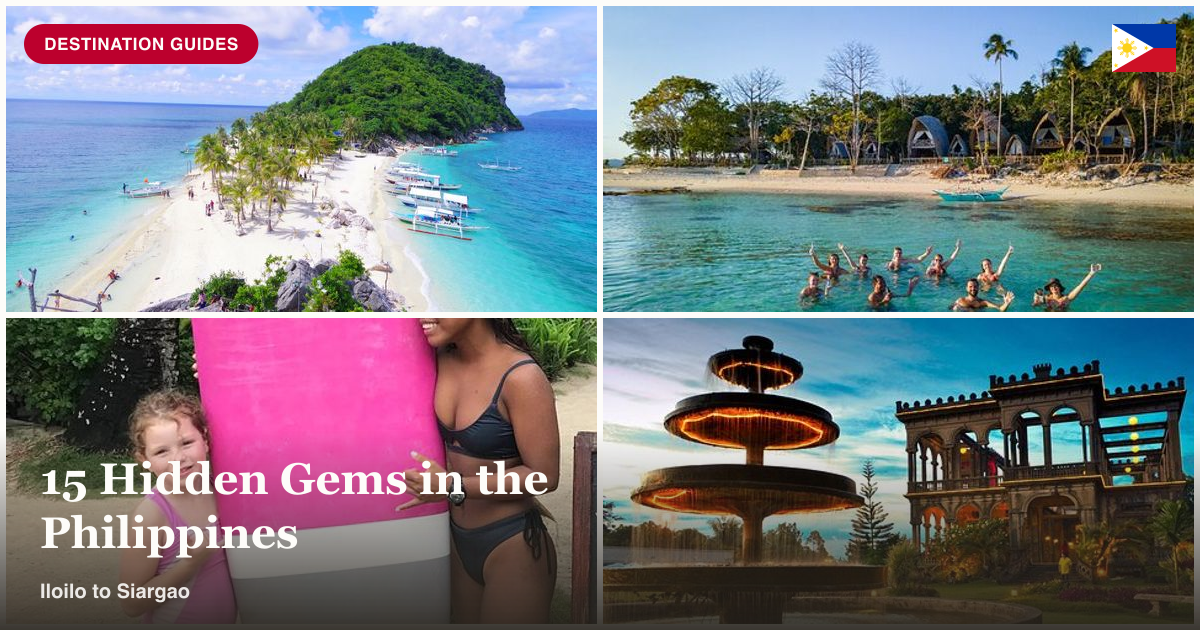
Obscurity is relative here, and this list says so honestly instead of slapping “hidden gem” on anything that isn’t Boracay. A few of these are genuinely hard to reach and lightly visited by international travelers. Others are well known domestically and simply underrated abroad — that’s a different thing, and it’s labeled as such.
Genuinely hard to reach
Batanes requires a dedicated flight from Manila and isn’t a side trip from any other itinerary, which is exactly why it stays this uncrowded. Rolling green hills, limestone Ivatan houses built to survive typhoons, and a coastline that looks nothing like the rest of the country. This is the closest thing on the list to a true hidden gem — low visitor numbers here are a direct function of access cost, not lack of appeal.
Calaguas Islands, off Camarines Norte, see plenty of domestic weekend traffic but very few foreign visitors, mostly because getting there means a multi-leg trip most international itineraries skip. White sand and minimal development, at the cost of a longer, more complicated journey than most beach destinations demand.
Siquijor carries an old reputation for folklore and healers, which kept mainstream tourism away for years even though the island itself has clean, quiet beaches and easy diving. That reputation is fading, so the window on this one being genuinely underrated is closing.
Well known domestically, underrated abroad
Masungi Georeserve, a rewilded limestone forest reserve a few hours outside Manila, draws a steady stream of local weekend hikers and is booked out well in advance on busy weekends. Not hidden in any real sense — just still largely unknown to first-time international visitors who don’t look past the standard Manila day-trip list.
Sagada, in Mountain Province, is well established on the backpacker trail within the country, known for hanging coffins and cave systems. International visibility is lower than Banaue despite comparable scenery, mostly because it takes longer to reach and doesn’t show up on as many first-timer itineraries.
Malapascua Island, off northern Cebu, is a known name among divers specifically for thresher shark sightings, but stays largely invisible to travelers who aren’t already diving-focused. A strong pick if diving is the priority and Cebu’s mainstream stops (whale sharks in Oslob, city day trips) already feel covered.
Kalanggaman Island, off Leyte, has a sandbar setup similar in spirit to Camiguin’s White Island but far less name recognition internationally. Getting there takes more planning than a standard Visayas itinerary allows for, which keeps the numbers down.
Quieter versions of famous places
Corong-Corong, a short tricycle ride from El Nido town, gives the same lagoon-hopping access at a calmer pace and lower cost than staying in town proper. Not hidden — every budget guide to El Nido mentions it — but genuinely quieter than the main strip.
Nacpan Beach, north of El Nido town, is a long stretch of undeveloped coastline that most El Nido visitors skip because it isn’t part of the standard lagoon tour route. Worth a half-day detour for travelers who’ve already done the main lagoons and want sand without a boat involved.
Apo Island, near Dumaguete in Negros Oriental, offers close-range sea turtle snorkeling without the crowd density of bigger-name reef destinations. Small and quiet enough that it still reads as underrated, even though it’s well documented among divers. Viator’s Dumaguete-filed tours include a dedicated Apo Island and Dumaguete countryside day (₱8,991 ($146)), still a thin, specialist catalog compared to the mainstream reef circuits further north.
Not hidden anymore (included for honesty)
Naked Island and Guyam, off Siargao, get marketed as hidden gems constantly and no longer qualify. They’re standard stops on every Siargao island-hopping tour now — worth visiting, just not worth the “secret” framing.
Hinatuan Enchanted River, in Surigao del Sur, is a striking turquoise spring-fed river that’s well photographed and well known within Philippine domestic travel content, even if international awareness lags. Call it underrated abroad, not hidden.
Two more worth the detour
Camiguin’s interior, away from the White Island sandbar most visitors photograph and leave, holds cold spring pools and old church ruins from a 19th-century eruption that barely make it into standard itineraries. The sandbar draws the day-trippers; the rest of the island stays quiet by comparison, even on a destination that isn’t obscure to begin with.
Corong-Corong’s northern stretch, past where most El Nido guesthouses cluster, thins out into a quieter run of beach with far fewer people per meter of sand than the town center. Not a secret location by any means, just a five-minute walk most visitors don’t bother making.
How “hidden” actually gets decided here
Three things push a Philippine destination toward genuine obscurity rather than just quiet: flight access (Batanes, Calaguas), a reputation that scared off mainstream tourism for reasons unrelated to quality (Siquijor), or simple distance from the standard Manila-Cebu-Boracay-Palawan circuit most first-time visitors default to (Kalanggaman, Malapascua). None of that makes a place better than the famous version — Chocolate Hills and El Nido’s lagoons earn their reputation. It just means the quieter version exists, and it’s worth naming honestly instead of overselling.
The honest verdict
Batanes and Calaguas earn the “hidden gem” label on access difficulty alone. Masungi, Sagada, and Malapascua are better described as underrated rather than hidden — plenty of people know about them, just not the international travelers planning their first Philippines trip. Naked Island and Guyam prove how fast the label expires: give a spot one viral photo and a boat-tour operator, and “hidden” stops being accurate within a season.
None of this means skip the famous stops for these instead. Chocolate Hills and El Nido’s lagoons are famous because they deliver, and a first Philippines trip should still lead with them — see the first-timer’s guide for how those fit into a realistic itinerary. Treat this list as the second- or third-trip layer: places worth the extra planning once the country’s headline sights are already checked off, not a replacement for them.
Book these while you’re there
Manila: Intramuros Night Tour with Folklore and History


Immerse in Culture: Villa Escudero Coconut Plantation Experience
Best from Manila to Vigan Old Town 2 Days Tour


Banaue-Hapao Rice Terraces (Car Rental W/ Manila Tourist Driver)


#philippines#off the beaten path#destinations#islands
Frequently Asked Questions
Are these places actually undiscovered?
Some are, most aren't in the strict sense, and this list says which is which. A few spots here are genuinely obscure to international travelers even though domestic tourists know them well; others are simply less crowded than the country's headline destinations, not secret.
What's the most genuinely obscure entry on this list?
Batanes, honestly, mostly because it requires a dedicated flight and isn't a side trip from anywhere else. Low visitor volume there is a function of access difficulty, not lack of appeal.
Are Siargao's Naked Island and Guyam still hidden gems?
No, not anymore — they're standard stops on Siargao island-hopping tours now and shouldn't be marketed as secret. They're on this list only as a reference point for how fast a genuine hidden gem can stop being one.
Is it worth traveling far out of the way for a genuinely obscure spot?
Only if the destination itself justifies the detour beyond just being empty of tourists. An obscure waterfall with nothing else nearby is a harder sell than a place like Siquijor, which combines low crowds with an actual reason to spend two or three days there.