Kyoto Autumn Leaves 2026: Best Spots + Crowd Math
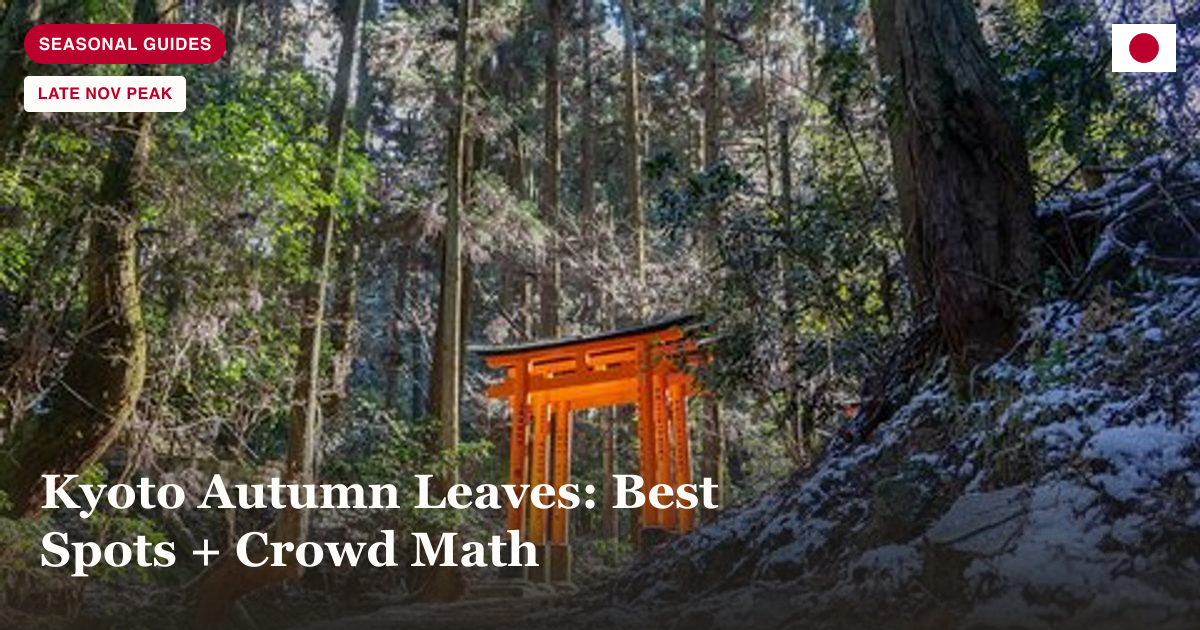
Kyoto’s maples peak mid-to-late November, roughly two to three weeks after Tokyo’s, and the famous spots fill up by mid-morning on any clear-sky weekend. Timing the visit, not finding a “hidden” spot, is what actually separates a good foliage trip from a crowded one.
Verified: September 1, 2026.
Why Kyoto’s season runs late
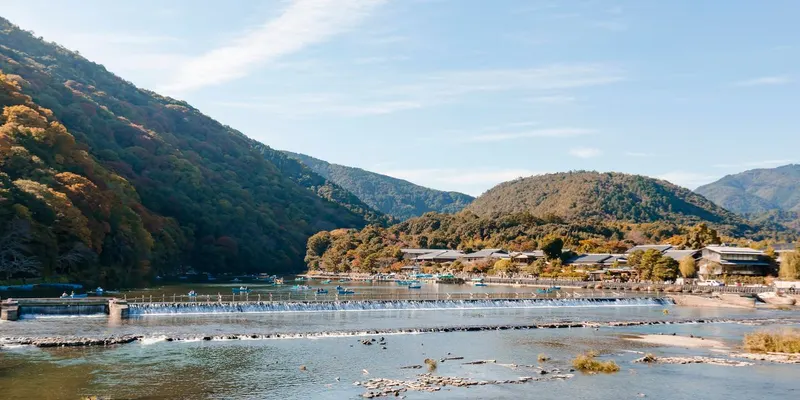
Kyoto sits in a basin that holds daytime heat longer into autumn than Tokyo or coastal cities, which pushes peak color into the back half of November most years. Higher-elevation spots (Arashiyama’s hillsides, the mountain temples northeast of the city) tend to turn about a week ahead of the lower, more sheltered gardens downtown. If a trip window is flexible, checking a live foliage forecast two to three weeks out beats planning off a fixed calendar date.
Free viewing, no ticket needed
Most of Kyoto’s best autumn color costs nothing to see. The Philosopher’s Path, a canal-side walk lined with maples between Ginkaku-ji and Nanzen-ji, is free and works well as an early-morning walking route before the day-trip crowds arrive. The approach roads to Nanzen-ji and Eikando (the inner Eikando garden does charge entry, but the temple grounds and surrounding streets don’t) turn a deep red by late November. Kiyomizu-dera’s outer approach street, Sannen-zaka, is free to walk and colors up nicely, though the temple itself charges admission.
The one thing that matters: getting there before 9 AM
Tofuku-ji, widely considered Kyoto’s single best foliage temple, becomes genuinely difficult to move through by mid-morning during peak week, tour buses and day-trippers stack up on its Tsutenkyo Bridge viewpoint. The same pattern hits Arashiyama and the Philosopher’s Path. Arriving at opening, or within the first hour, is the difference between an actual view and a wall of people holding phones over the railing.
Pairing Fushimi Inari with a foliage temple
Fushimi Inari’s thousands of torii gates aren’t a foliage specialist site on their own, but the shrine sits a short train ride from Tofuku-ji, which makes combining both a genuinely efficient route rather than two separate trips. Fushimi Inari Sacred Hike: Summit, 10,000 Torii & 7 Shrines (¥8,381 ($51.80)) covers the full mountain trail with a guide who can time the route around crowd patterns, useful in a season where every popular site is at its busiest.
For an early-morning version that dodges both the Fushimi Inari crowds and the Tofuku-ji rush, Kyoto Early Bird Tour in Uji and Fushimi Inari (¥10,766 ($66.54)) starts before the general public arrives, the same early-timing strategy that works for Arashiyama’s bamboo grove applies here too.
An evening option, once the day crowds thin
Kyoto: Fushimi Inari Night Walk, Gion & Izakaya Food Tour (¥8,411 ($51.99)) trades the morning crowd-beat strategy for the opposite approach, visiting after most day visitors have left, then finishing in Gion with dinner. Worth it for travelers who’d rather sleep in and see the shrine lantern-lit than fight for a 7 AM train.
The photo-op layer: kimono rental
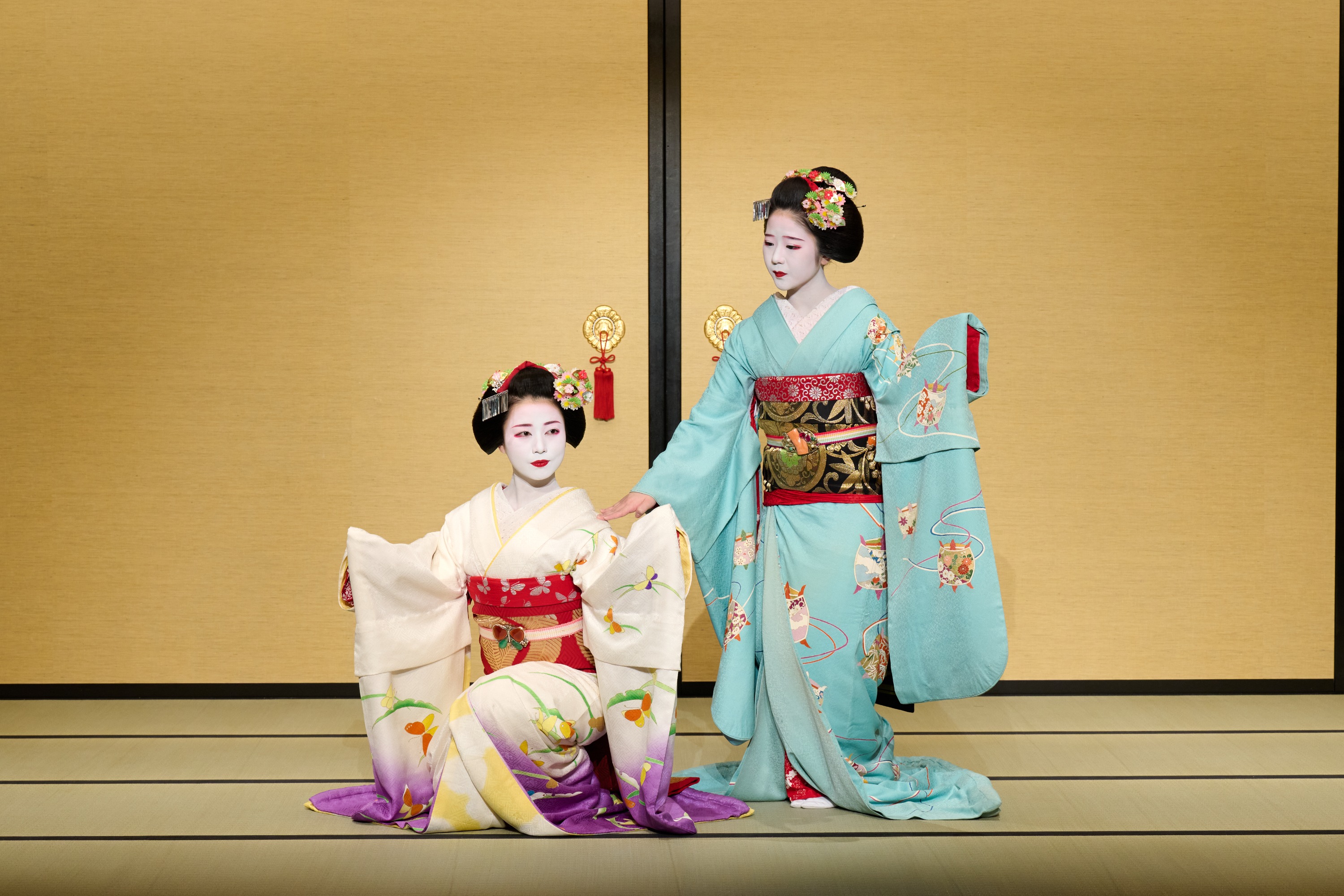
Autumn is one of the two peak seasons (alongside spring cherry blossoms) for kimono photos against temple backdrops. Kimono & Yukata Rental and Photo Shoot (Gion-Shijo, Yasaka Shrine) (¥2,759 ($17.05)) is the cheapest of several similar options clustered around Gion and Yasaka Shrine, useful if the foliage photos are as much the point of the trip as the walk itself. Book ahead in peak week; rental shops in this district sell out same-day slots fast during late November.
The full-day version, if time is tight
Kyoto: Nijo, Bamboo Grove, Golden Pavilion & Fushimi Inari Bus Tour (¥8,009 ($49.50)) stacks four major sites, including Nijo Castle’s own maple-lined grounds, into a single guided day. This is the option for a one-day Kyoto stop on a bigger Japan itinerary, where DIY train-hopping between spread-out temples would eat most of the daylight.
Where to stay for this season
Kyoto hotel rates climb through November as the foliage season is one of the city’s two annual demand spikes, book earlier than a typical trip. Our Kyoto where-to-stay guide breaks down neighborhoods, and the hotel picker tool filters current listings by area and price if dates are still flexible. For how that pricing pressure fits the rest of the country’s autumn-into-winter run, see the foliage-to-illuminations guide.
Getting between spots without wasting a day
Kyoto’s bus network gets genuinely slow during peak season, packed buses skipping stops is common on the routes serving Arashiyama and Kiyomizu-dera. Our Kyoto bus tours compared piece and the full 2-day Kyoto itinerary both build routes around this bottleneck rather than around straight-line distance.
Verdict
Free viewing covers most of what makes Kyoto’s autumn worth the trip, the real cost is time, arrive before 9 AM at the famous spots or accept the crowds. A guided tour earns its price by routing around both the crowd timing and the spread-out geography, not by unlocking anything a free walk can’t see.
Prices verified as of September 1, 2026.
Book these while you’re there
From Kyoto: Nara, Osaka & Kobe Day Trip – 3 Cities in 1 Day
Gion Corner: Traditional Arts Performance

Private Tea Ceremony and Sake Tasting in Kyoto Samurai House
Kyoto: Traditional Japanese Koto Workshop with Certificate
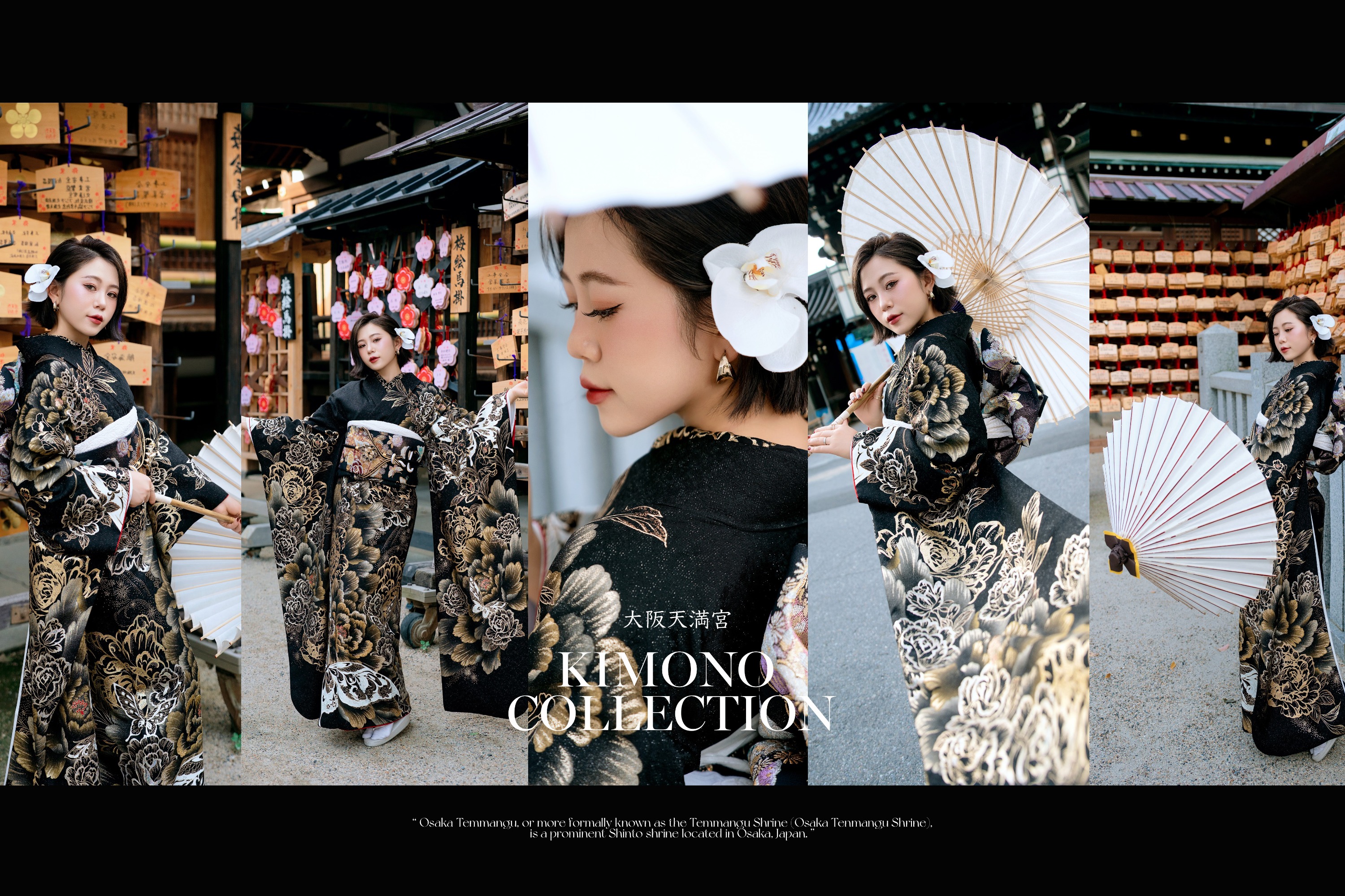
Kimono & Yukata Rental and Photo Shoot (Kyoto, Gion-Shijo, Yasaka Shrine) - Kimono Rental Misaki

Kyoto: Traditional Japanese Music Workshop with Shakuhachi
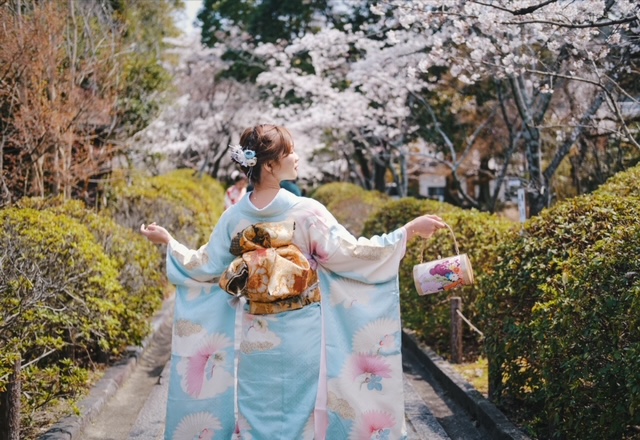
Kimono Rental (Kyoto/Provided by Kimono Rental Kanwa Yasaka Shrine)
Richmond Hotel Premier Kyoto Shijo
save ¥13,556 vs sell price
Check rateHilton Tokyo Narita Airport
save ¥7,910 vs sell price
Check rateOriental Hotel Okinawa Resort & Spa
save ¥5,889 vs sell price
Check rate#kyoto#autumn#fushimi inari#klook#getyourguide
Frequently Asked Questions
When is peak autumn foliage in Kyoto?
Mid-to-late November, usually the third week, is the reliable peak most years. Maples color later than Tokyo's, roughly two to three weeks behind, because Kyoto sits in a basin that holds warmth longer into autumn.
Is Kyoto's autumn foliage free to see?
Yes, at the temples and streets covered below. Some famous spots (Tofuku-ji's Tsutenkyo Bridge, certain sub-temple gardens) charge a separate entrance fee for their inner grounds, but the maple views from public paths and main approaches cost nothing.
Do I need a guided tour for Kyoto in autumn?
No, but a tour solves the two real problems this season creates: knowing which temple is actually at peak color on a given week, and getting between spread-out sites without wasting half a day on buses. A guide with current local knowledge earns more of its price in November than in any other season.
Is Fushimi Inari worth visiting during autumn foliage season?
Yes, though it's less about maples (the shrine has some, but it's not a foliage specialist site) and more that it pairs well on a route with Tofuku-ji, one of Kyoto's best foliage temples, a short train ride away. Combining both in one day is a common and efficient itinerary.